The short answerSome semaglutide muscle loss is expected, because part of any large weight loss is lean tissue. In the STEP 1 trial’s body scans, about 60% of the weight people lost was fat and about 40% was lean mass, which includes muscle. Expert groups recommend strength training at least three times a week, plus enough protein, to protect your muscle on a GLP-1.
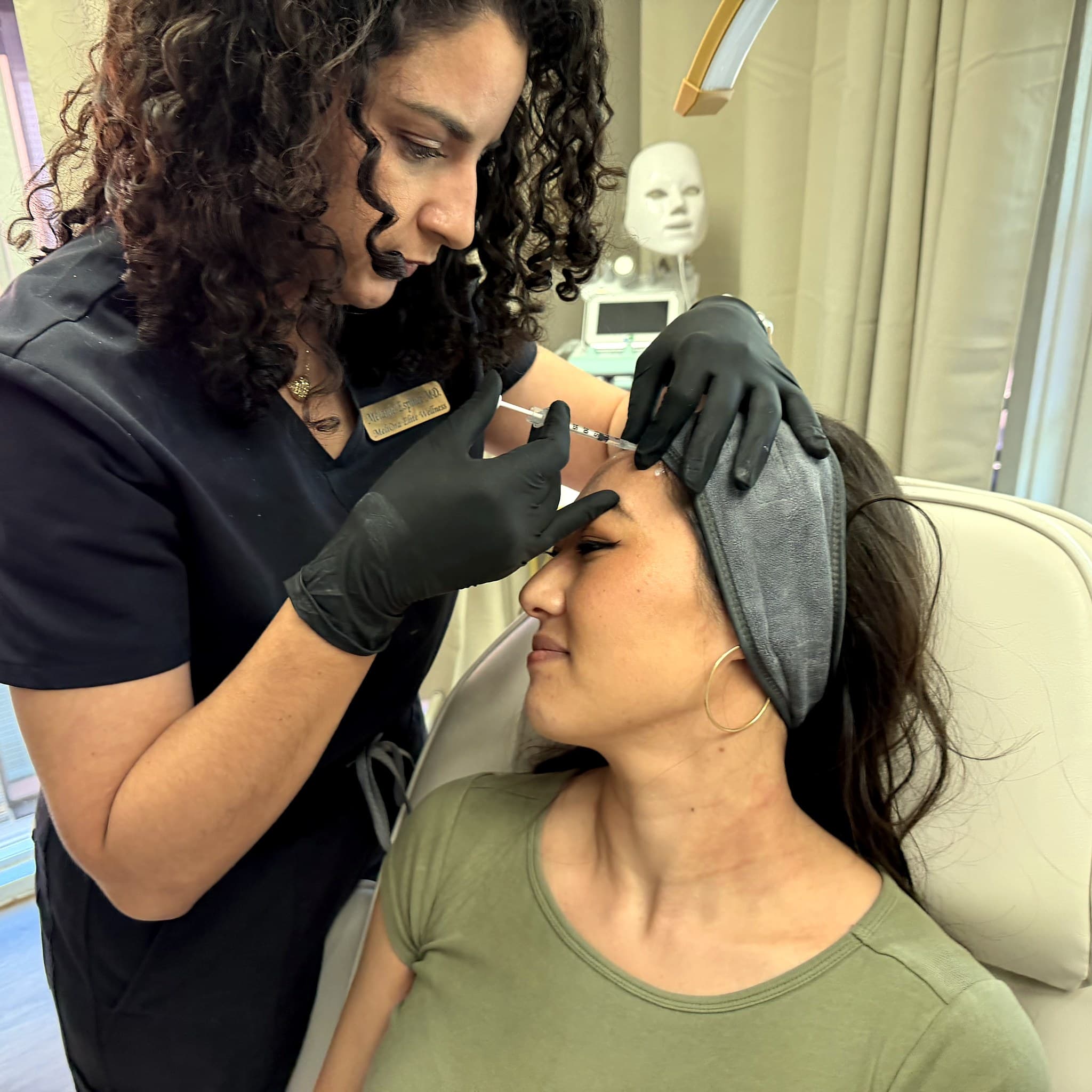
Semaglutide muscle loss is a common worry for people starting a GLP-1. It’s a fair question. These medicines turn down your appetite, you eat less, and the scale moves. But not every pound that leaves is fat. Below, Dr. Melanie Espinet, a board-certified family physician, walks through what the trial body scans actually measured, who should pay the closest attention, and the exercise and protein habits that help you keep the muscle you have. If you’re weighing treatment, our semaglutide weight loss program in Lutz explains how care works.
Does semaglutide cause muscle loss?
Yes, some. The prescribing information for semaglutide sold as Wegovy says it lowers body weight “with greater fat mass loss than lean mass loss.” So you lose more fat than lean tissue, but you lose some of both. That is true of nearly every way of losing a large amount of weight. A 2025 joint advisory from four nutrition and obesity medicine groups, including the Obesity Medicine Association and The Obesity Society, notes that losses of fat, lean mass, and muscle track with how much weight comes off, and look similar to what happens with bariatric surgery and very low calorie diets.
It also helps to know what “lean mass” means. On a body scan, lean mass is everything that isn’t fat or bone mineral: muscle, plus organs, ligaments, tendons, and water. Muscle is about half of lean mass, so the advisory estimates that in the semaglutide trial, roughly 20% of the total weight lost was muscle itself. That is still worth protecting, especially as you get older.
What the trial body scans (DXA) found
The best data come from DXA scans, a type of body composition scan that separates fat from lean tissue. Large weight loss trials scanned a subset of participants before and after treatment. Both big trials below paired the medication with lifestyle counseling. In SURMOUNT-1, for example, participants were advised to build up to at least 150 minutes of activity a week, with no specific strength training protocol.
| Study | What the scans showed |
|---|
| STEP 1: semaglutide 2.4 mg weekly for 68 weeks | Of an average 13.6 kg (about 30 pounds) lost, 8.3 kg was fat (62%) and 5.3 kg was lean mass (38%), as summarized in the 2025 joint advisory |
|---|
| SURMOUNT-1: tirzepatide weekly for 72 weeks (124 people scanned on tirzepatide) | Fat mass fell 33.9% and lean mass fell 10.9%. About 75% of the weight lost was fat and 25% was lean mass. |
|---|
| SURMOUNT-1 placebo group (lifestyle counseling only, 36 people scanned) | Fat mass fell 8.2% and lean mass fell 2.6%, also about 75% fat and 25% lean |
|---|
| 2026 meta-analysis of 7 randomized trials (821 people) at obesity doses; 5 of the 7 tested liraglutide | Lean mass fell about 1.7 kg more than with placebo on average, yet lean mass made up a slightly larger share of body weight afterward (up 1.81%) |
|---|
Two things stand out. First, losing lean mass is not unique to these drugs: in SURMOUNT-1, people on placebo lost fat and lean mass in about the same proportion as people on tirzepatide. They just lost less of both. Second, because fat drops faster than lean tissue, body composition usually improves overall. These are separate trials with different people and methods, so the different splits shouldn’t be read as proof that one medicine is easier on muscle. Our semaglutide vs. tirzepatide comparison covers how the two medicines differ.
Is semaglutide muscle loss a problem?
For many people, the trade looks favorable. In STEP 1, people on semaglutide reported a bigger improvement in their physical functioning than people on placebo, and SURMOUNT-1 found the same for tirzepatide, even though both groups lost some lean mass. The honest caveat: the 2026 meta-analysis points out that the trials it pooled did not measure muscle strength or physical capacity, so what lean mass loss means for daily life is still being studied.
Muscle loss matters more for some people than others. The joint advisory says that low protein intake on a smaller appetite may add to muscle loss and the risk of sarcopenia, meaning too little muscle, particularly in people who are:
- Older
- In perimenopause or menopause
- Living with lower testosterone
- Mostly sedentary
- Not doing any resistance or strength training
Modeling cited in the same advisory suggests that without structured strength training, muscle may make up 10% to 15% of the weight lost in women and 20% to 25% in men. These are estimates, not measurements, but they show why a plan matters. If you’re a woman in midlife, our guide to menopause weight gain explains why muscle tends to slip during those years anyway.
What about bone?
Bone deserves the same attention. The advisory notes that weight loss that is both large (14% or more) and fast (over 3 to 4 months) is linked to significant bone loss, and that older people and women tend to lose more. In one randomized trial it describes, a year of GLP-1 treatment plus exercise training preserved bone density, while GLP-1 treatment alone lowered it. The advisory also warns that, without a nutrition and exercise plan, stopping and restarting a GLP-1 with weight regain in between may make muscle and bone loss worse. Our post on stopping semaglutide covers what to expect if you come off treatment.
How to prevent muscle loss on semaglutide: strength training first
Strength training is the most important habit here. The joint advisory says structured strength (resistance) training, or a mix of strength and aerobic exercise, is well established to help preserve lean mass during weight loss, while aerobic exercise alone has a smaller effect. Its recommendation is to pair a GLP-1 with regular strength training at least three times a week plus at least 150 minutes of moderate aerobic activity, such as brisk walking, tailored to your fitness level.
| Strength training basics | What the guidance says |
|---|
| How often | At least 3 strength sessions a week while on a GLP-1 (2025 joint advisory). The NIA’s advice for older adults is at least 2 days a week. |
|---|
| What to work | The major muscle groups: legs, hips, chest, back, abdomen, shoulders, and arms |
|---|
| How hard | At least moderate effort, to the point where one more repetition would be hard |
|---|
| How many | One set of 8 to 12 repetitions per exercise works, and two or three sets may work better |
|---|
| Recovery | Avoid working the same muscle group two days in a row |
|---|
| Aerobic activity | At least 150 minutes a week of moderate activity, such as brisk walking |
|---|
You don’t need a gym. The National Institute on Aging lists resistance bands, weight machines, and hand weights, but also body-weight moves like squats, lunges, push-ups, and planks, and everyday work like carrying groceries or digging in the garden. If you’re new to this, start without weights until the movements feel comfortable, then add weight, sets, or days gradually. The joint advisory adds that working with an exercise physiologist or strength trainer may help many people check their starting strength, set up a program, and track progress over time.
A few practical points while you’re on a GLP-1. Breathe out during the effort instead of holding your breath, and drink water when you sweat. The Wegovy label warns that nausea, vomiting, and diarrhea can cause dehydration that may lead to kidney problems, so fluids matter more than usual; our guide to semaglutide side effects explains the rest. If you have a heart, joint, or other health condition, check with your physician before starting a new program.
Is protein enough to prevent muscle loss on a GLP-1?
No, not by itself. Protein is the second half of the plan, but it can’t do the job alone. The joint advisory is direct about this: more protein without structured strength training is likely not enough to preserve muscle, and protein beyond what your muscles need for repair or growth can be turned into fat by the liver.
Protein still matters, because a smaller appetite makes it easy to fall short, and the advisory links low protein intake to muscle loss. Its simplest target is 80 to 120 grams a day, and it suggests eating protein first at each meal so you get it in before you feel full. For the full set of protein benchmarks and food ideas, see what to eat on semaglutide. Ask Dr. Espinet at your visit which target fits your health history.
How do you know if you’re losing muscle on semaglutide?
The bathroom scale can’t tell you. The joint advisory lists several ways clinicians can track muscle during GLP-1 treatment:
- Bioelectrical impedance analysis (BIA): a quick, low-cost body composition reading that can be repeated often
- DXA scan: considered a gold standard for body composition but more costly, so the advisory suggests it could be done yearly or every 2 years
- Simple strength and function tests, such as sit-to-stand, stair climbing, and timed up-and-go, which are most useful in older adults
As the advisory points out, scans measure muscle mass, not muscle health or strength. In daily life, pay attention to function. If getting up from a chair, climbing stairs, or carrying groceries starts to feel harder rather than easier as you lose weight, tell your physician. That is a signal to look at your protein, your training, and the pace of your weight loss, which the advisory lists among the factors that affect how much lean mass you lose.
Does tirzepatide cause muscle loss too?
Yes, in a similar way. In the SURMOUNT-1 body scan substudy, tirzepatide lowered fat mass by 33.9% and lean mass by 10.9% over 72 weeks, and about three quarters of the weight lost was fat. Post hoc checks by age group (under 50, 50 to 64, and 65 and older) and by sex found close to the same split, though those subgroups were small. The strength and protein advice above applies to tirzepatide just the same. If you’re on it, our tirzepatide weight loss page explains the program.
How MeliOra fits
At MeliOra Elite Wellness, Dr. Melanie Espinet, a board-certified family physician, prescribes semaglutide or tirzepatide and follows your progress herself. Bring your questions about protein, strength training, and how everyday activities feel to your check-ins, and Dr. Espinet will walk you through what fits your plan. She sees patients at home across Tampa Bay with no travel fee, at the Lutz office for select appointments, or by telehealth for patients anywhere in Florida.
Semaglutide is $150/month at the starting dose and $240/month for higher dosing. Tirzepatide is $230/month to $320/month. The monthly price includes physician visits, lab work, medication and supplies, dose adjustments, and check-ins, with no consultation fee. To see whether a GLP-1 fits your health and goals, start with our medical weight loss program in Lutz.
Frequently asked questions
Does semaglutide cause muscle loss?
Yes, some. Semaglutide lowers weight with more fat lost than lean mass, but some lean mass, including muscle, is lost too. That happens with most large weight losses, and strength training plus enough protein helps limit it.
How much muscle do you lose on semaglutide?
In the STEP 1 trial’s body scans, about 40% of the weight lost was lean mass and about 60% was fat. Muscle is about half of lean mass, so a 2025 joint advisory estimates that roughly 20% of the weight lost was muscle. Your own result depends on your age, activity, protein intake, and how fast you lose.
How can I prevent muscle loss on semaglutide?
Strength train at least three times a week and eat enough protein. A 2025 joint advisory from nutrition and obesity medicine groups recommends regular strength training plus at least 150 minutes of moderate aerobic activity a week while on a GLP-1, and notes that protein alone is unlikely to protect muscle without training.
Does walking prevent muscle loss on a GLP-1?
Not by itself. The 2025 joint advisory says aerobic activity alone has a smaller effect on preserving lean mass than strength training, so pair walking with strength work at least three times a week. Walking still counts toward the 150 minutes of moderate aerobic activity a week the advisory recommends.
Can I do strength training on semaglutide?
Yes, and it is recommended. Start at your own level with body weight or light resistance, drink water when you sweat, and check with your physician first if you have a heart, joint, or other health condition.
Is lean mass the same as muscle?
No. Lean mass includes muscle plus organs, ligaments, tendons, and water, and muscle makes up about half of it. A drop in lean mass on a body scan is therefore larger than the muscle loss alone.
Does tirzepatide cause muscle loss?
Yes, in a similar way. In the SURMOUNT-1 body scan substudy, about 75% of the weight lost on tirzepatide was fat and 25% was lean mass, the same split seen with placebo. The same strength and protein habits help.
Who is most at risk of muscle loss on a GLP-1?
Older adults, people in perimenopause or menopause, people with lower testosterone, and people who are sedentary or skip strength training are at higher risk, according to a 2025 joint advisory. The advisory notes that low protein intake on a smaller appetite may add to muscle loss, particularly in these groups.
Related Services
Sources & References
Ready to take the next step?
Serving Lutz, Wesley Chapel, Land O'Lakes, Carrollwood, New Tampa & greater Tampa Bay.
Book Your Consultation