The short answerOzempic face is a media nickname, not a medical diagnosis, for the hollow cheeks, looser skin, and more tired look some people notice after losing a lot of weight on a GLP-1 medication such as semaglutide. Research so far links it mainly to how much weight is lost, and similar changes follow large weight loss from surgery or other methods, though a drug effect has not been ruled out. No habit is proven to prevent it, and Botox does not restore lost volume, but enough protein, strength training, and a steady pace protect the muscle and nutrition your body depends on.
If you’ve lost weight on semaglutide or tirzepatide and your face looks thinner than you expected, you’re not imagining it, and you’re not alone. The phrase “Ozempic face” spread through news stories and social media as GLP-1 medications became popular. This guide explains what is happening under the skin, who is more likely to notice it, what you can do to lower your risk, and which treatments can help. One note up front: MeliOra offers physician-led medical weight loss in Lutz and Botox with Jeuveau or Xeomin, but not dermal fillers, so fillers appear here for comparison only.
What is Ozempic face?
Ozempic face describes facial changes that can show up after significant weight loss on a GLP-1 medication. A 2026 dermatology study described it as sunken cheeks, sagging skin, and hollow eyes. A 2025 systematic review in plastic surgery notes that the public and plastic surgeons coined the term, along with cousins like “Ozempic body,” to describe lost soft tissue volume.
It is not a diagnosis, and it is not a listed side effect. The same review points out that facial fat loss and a more aged look are not mentioned in the Ozempic prescribing information. What people are describing is real, though. The review lists the areas where fat loss tends to show:
- The temples, which can look hollow or sunken
- The cheeks, which can flatten and lose their fullness
- The under-eye hollows (the tear trough), which can deepen
- The jawline, where looser skin can soften the edge
- The folds from the nose to the mouth and the lines below the corners of the mouth, which can look deeper
- The lips and chin, which can look smaller
Together, these changes can make a face look gaunt or older than the person feels. The review adds that the effect is more pronounced in older adults, who naturally have less collagen holding the skin in place.
Semaglutide face or weight loss face: is it the drug?
Ozempic and Wegovy both contain semaglutide, so you’ll also see the terms “semaglutide face” or, for tirzepatide, “Mounjaro face.” For how the brand names differ, see our guide to Wegovy vs Ozempic. The more useful question is whether the medicine itself does something to your face, or whether the weight loss does.
So far, the evidence points mainly to weight loss. The plastic surgery review found no evidence that GLP-1 medications preferentially shrink facial fat. Some experts think the drugs simply reveal age-related changes that were already under way, by thinning the cushion of fat beneath the skin. The authors of the 2026 survey noted that sagging skin, facial volume loss, and hair shedding after large weight loss from bariatric surgery and other methods have long been recognized. They concluded the changes may mainly reflect a normal consequence of losing fat rather than the drug itself.
The question isn’t fully closed, though. In that same survey, at every level of weight loss, people on GLP-1 medications reported sagging skin and less facial volume more often than people on other weight loss medicines. The authors said their study could not tell a drug effect apart from the amount or speed of weight loss, and called for more research.
In plain terms: any approach that removes a lot of fat can change your face. GLP-1 medications made large weight loss more common, so more people are noticing it at once.
Facial volume loss after weight loss: who notices it most?
The clearest pattern is the amount of weight lost. In the 2026 survey of 1,226 adults in a telehealth weight management program, where treatment included GLP-1 and other medicines, reports of facial changes rose steadily with the percentage of body weight lost:
| Body weight lost | Patients who reported each change |
|---|
| Less than 10% | Less facial volume: 13%. Sagging skin: 15%. Hair loss: 17% |
|---|
| 10% to 20% | Less facial volume: 37%. Sagging skin: 44%. Hair loss: 30% |
|---|
| More than 20% | Less facial volume: 50%. Sagging skin: 72%. Hair loss: 52% |
|---|
Keep the limits in mind. These were self-reported answers from people who chose to take a survey, most respondents were white women using telehealth, and the study did not record how fast people lost weight. Still, the trend matches what plastic surgeons describe. Two factors stand out in the research:
- How much you lose. Reports climbed with each step up in weight lost, and were most common past 20% of body weight.
- Your age. The plastic surgery review notes the changes are more pronounced in older adults, who have less collagen to begin with.
What the research has not settled is the role of speed. The plastic surgery review’s authors think rapid weight loss plays a part, but the survey did not track how fast people lost weight, so whether a slower pace protects your face, apart from how much you lose, is still an open question.
How to prevent Ozempic face: what the evidence supports
Here is the honest answer first: no study has shown that any habit prevents Ozempic face. What we do have is strong guidance on protecting muscle and nutrition during GLP-1 treatment. A 2025 joint advisory from the American College of Lifestyle Medicine, the American Society for Nutrition, the Obesity Medicine Association, and The Obesity Society lays out these priorities, and they are the sensible place to start.
- Protein at every meal. The advisory notes that the standard protein allowance is 0.8 grams per kilogram of body weight a day, and that higher targets of 1.2 to 1.6 grams per kilogram have been proposed during active weight loss. It also notes that experts have not settled which body weight to base the number on, so your target is worth personalizing.
- Strength training. The advisory recommends regular strength training at least 3 times a week, plus at least 150 minutes of moderate aerobic activity weekly, to help preserve muscle and bone.
- A steady pace. The advisory says how much muscle you lose depends partly on how severely you cut calories, how quickly you lose weight, and whether you strength train. Whether pace changes how your face looks, apart from how much you lose, has not been studied well.
- Enough food overall. People on GLP-1 medications eat much less. The advisory warns that eating that little can leave you short on vitamins and minerals, especially below about 1,200 calories a day for women or 1,800 for men, and it lists excessive hair loss and flaky or itchy skin among signs of a real deficiency.
For meal ideas that fit a smaller appetite, read what to eat on semaglutide. For protein and exercise in more depth, see our guide to muscle loss on GLP-1 medications. If your hair is thinning too, our post on GLP-1 hair loss explains why shedding happens and when it usually stops.
One more practical point: speak up early. If you notice facial changes a few months in, tell the physician managing your medication. Doses usually rise in steps, and how fast you move through them is a conversation worth having.
Ozempic face treatment: what can restore volume?
Lost volume needs something that adds volume back or lifts loose skin. According to the FDA, dermal fillers injected into the face can improve the appearance of facial lines and volume loss caused by age or certain medical conditions. The plastic surgery review calls fillers the primary treatment for volume loss, and notes that face and neck lift surgery may suit people with more loose skin after major weight loss. These are treatments to discuss with a board-certified dermatologist or facial plastic surgeon. MeliOra does not offer them.
The review also discusses a harder option: stopping the medication. That can mean giving up real health gains, and the joint advisory notes that weight regain is common after stopping, often close to the starting weight within a year. The review adds that regained fat rarely returns to the same places it left. Talk with your physician before making that call, and read what happens when you stop semaglutide first.
| Option | What it can and can’t do |
|---|
| Dermal filler | Adds volume under the skin in areas like the cheeks and temples. Not offered at MeliOra |
|---|
| Face or neck lift surgery | Lifts and removes loose skin after major weight loss. Performed by a surgeon |
|---|
| Botox with Jeuveau or Xeomin | Relaxes the muscles behind expression lines. Adds no volume and does not tighten loose skin |
|---|
| Stopping the medication | Weight regain is common, and regained fat may not return to the face |
|---|
| Protein, strength training, steady pace | Protects muscle and nutrition. Not proven to prevent facial changes |
|---|
The evidence for any of these treatments in GLP-1 patients specifically is thin. Of the 23 plastic surgery articles the 2025 review included, only three were cohort studies that compared GLP-1 users with a control group. Apart from one survey of surgeons and one systematic review, the rest were lower-quality evidence such as case reports, opinion pieces, and reviews.
Can Botox help Ozempic face?
Not with volume. Botox and fillers do different jobs. The FDA explains that botulinum toxin products are not dermal fillers: they are injectable drugs that keep muscles from tightening, so wrinkles don’t show as much. Botox cannot fill hollow cheeks or temples, and it cannot tighten loose or sagging skin.
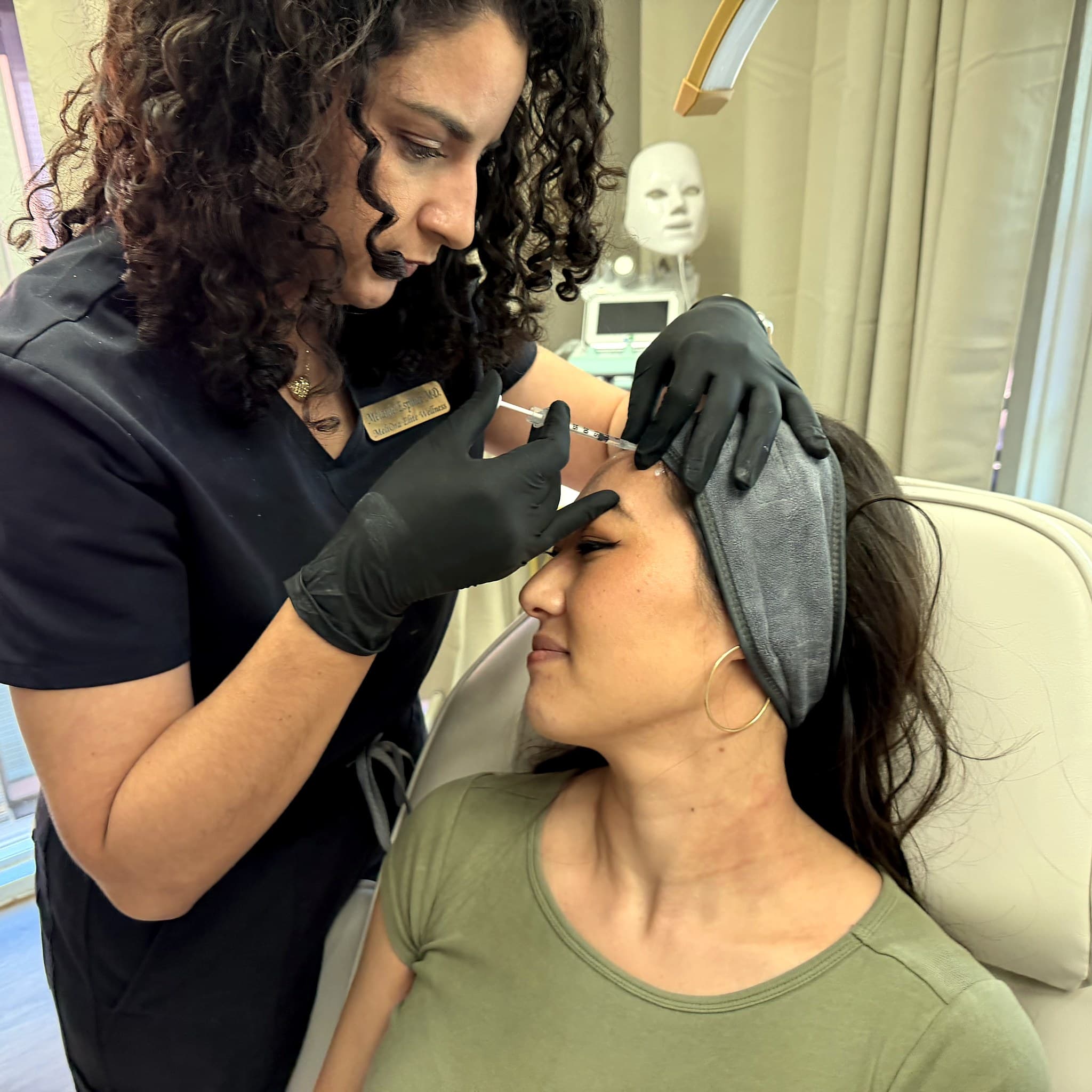
Where Botox can help is with the lines you make when you move, such as frown lines between the brows, forehead lines, and crow’s feet. If weight loss has left those lines bothering you more, Botox with Jeuveau or Xeomin may soften them. If hollowness is your main concern, Botox is the wrong tool. Our guide to Botox vs fillers explains which lines need which.
Does Ozempic face go away?
Usually not while the weight stays off. No long-term studies have followed it yet, but because the changes come from lost fat, they tend to last as long as the weight loss does. Gaining weight back is not a reliable fix either, since the plastic surgery review notes that fat rarely returns to its old distribution.
That doesn’t mean you’re stuck. You may decide the health benefits of your weight loss are worth a thinner face, and options to restore volume exist with specialists if you want them. If it matters to you, raise it early, plan your pace with your physician, and protect your muscle and nutrition along the way.
How MeliOra fits
Dr. Melanie Espinet, MD, manages every MeliOra weight loss patient herself, at a house call anywhere across Tampa Bay or at the Lutz office for select appointments, with no travel fee. Semaglutide starts at $150/month and tirzepatide at $230/month. The monthly price includes physician visits, lab work, medication and supplies, dose adjustments, and check-ins, with no consultation fee. At those check-ins you can bring up facial changes, and she can talk through your pace, protein, and strength training.
Here is what we won’t do: MeliOra does not offer dermal fillers, so if volume loss is your main concern, a board-certified dermatologist or facial plastic surgeon is the right next step. For expression lines, Botox with Jeuveau or Xeomin is $12/unit. If you want both weight loss and Botox, the MeliOra Reset pairs tirzepatide with Botox every 3 months as one 12-month membership at a set monthly price. It is not a treatment for Ozempic face, and we won’t pretend otherwise.
Frequently asked questions
What does Ozempic face look like?
Ozempic face usually looks like hollow cheeks and temples, deeper folds around the mouth, and looser skin along the jaw. Some people also notice deeper under-eye hollows and smaller-looking lips and chin. Together these can make a face look gaunt or older.
Does everyone on Ozempic get Ozempic face?
No, and it depends heavily on how much weight you lose. In a 2026 survey of adults on prescription weight loss treatment, 13% of people who lost less than 10% of their body weight reported less facial volume, compared with 50% of those who lost more than 20%. Older age may also make it more noticeable.
How can I prevent Ozempic face?
There is no proven way to prevent Ozempic face. The sensible steps are the ones experts recommend for everyone on a GLP-1: enough protein, regular strength training, enough food to meet your nutrient needs, and a pace you discuss with your physician. These protect muscle and nutrition, even though no study has shown they protect the face.
Is Ozempic face permanent?
Ozempic face often lasts as long as the weight stays off, because the changes come from lost fat, though no long-term studies have tracked it yet. Regaining weight is not a reliable fix, since fat rarely returns to its old places. Fillers or surgery from a specialist can restore volume or lift loose skin.
Does tirzepatide cause Ozempic face too?
Yes, the same facial changes can happen with tirzepatide, the medicine in Mounjaro and Zepbound. A 2025 plastic surgery review describes them for GLP-1 medications as a group, tirzepatide included, and they track closely with how much weight you lose. Large weight loss from surgery or other methods can cause them as well.
Can Botox fix Ozempic face?
No, Botox does not restore lost facial volume. It relaxes the muscles behind expression lines like frown lines, forehead lines, and crow’s feet. Hollow cheeks and temples need a treatment that adds volume, such as filler from a specialist.
Does MeliOra offer treatment for Ozempic face?
MeliOra does not offer dermal fillers or other volume-restoring treatments. Dr. Espinet can help with the weight loss side, including pace, protein, and strength training, and offers Botox with Jeuveau or Xeomin for expression lines. For lost volume, see a board-certified dermatologist or facial plastic surgeon.
Related Services
Sources & References
Ready to take the next step?
Serving Lutz, Wesley Chapel, Land O'Lakes, Carrollwood, New Tampa & greater Tampa Bay.
Book Your Consultation