The short answerBotox and dermal fillers treat different kinds of lines. Botox, which at MeliOra means Jeuveau or Xeomin, is an injectable drug that relaxes the muscles behind lines you make when you move, such as frown lines, forehead lines, and crow’s feet. Fillers are gel implants that add volume to folds, hollows, lips, and cheeks. MeliOra offers Botox only, not fillers.
Botox vs fillers is one of the most common questions in aesthetics, and it’s easy to see why. Both are injections, both treat lines, and people often say “Botox” for anything injected into the face. But they work in opposite ways: one relaxes a muscle, and the other fills space under the skin. This guide explains the difference so you can match the treatment to the line. One note up front: MeliOra offers Botox in Lutz with Jeuveau or Xeomin and doesn’t offer dermal filler of any kind, so filler appears here for comparison only.
What’s the difference between Botox and filler?
The FDA draws the line clearly: botulinum toxin products are not dermal fillers. They’re injectable drugs that work by keeping muscles from tightening, so wrinkles don’t show as much. Dermal fillers are gel-like substances injected under the skin to create a smoother or fuller look. The FDA regulates fillers as medical devices and also calls them injectable implants.
How Botox and filler compare| Factor | Botox | Filler |
|---|
| What it is | A prescription drug made from purified botulinum toxin type A | A gel implant regulated as a medical device |
|---|
| How it works | Botox relaxes the muscle that creases the skin. Filler adds volume under the skin |
|---|
| Best for | Lines you make when you move | Folds, hollows, and lost fullness |
|---|
| Typical areas | Frown lines, forehead lines, and crow’s feet | The folds from the nose to the mouth, lips, cheeks, chin, and the backs of the hands |
|---|
| When you see results | Builds over about two weeks | Most give immediate or near-immediate results |
|---|
| How long it lasts | About three to four months | Months to years, depending on the material |
|---|
| What’s injected | Botulinum toxin type A with a few inactive ingredients | Materials such as hyaluronic acid, calcium hydroxylapatite, or poly-L-lactic acid |
|---|
| At MeliOra | Botox with Jeuveau or Xeomin. No fillers |
|---|
For a closer look at what’s inside a vial of Botox and how it acts on the nerve, read what Botox is made of and how it works.
Dynamic vs static wrinkles: the key to choosing
The most useful way to decide between Botox and filler is to notice when your line shows up. A review in American Family Physician describes two kinds:
- Dynamic wrinkles: seen during muscle contraction, such as forehead creases when you raise your brows, the 11s when you frown, and crow’s feet when you smile
- Static wrinkles: visible at rest, even when your face is completely relaxed
The same review explains that facial wrinkles form from two things working together: thinning of the skin’s deeper layer and repeated contraction of the muscles underneath. Botox addresses the muscle side. That’s why it gives more dramatic results on dynamic wrinkles than on static ones. It can stop a muscle from folding the skin, but it can’t replace volume or skin structure that has been lost.
Try a quick mirror test. Raise your brows, frown, and smile, then relax your face completely. Lines that vanish at rest are dynamic. Lines that stay are static, or on their way there. Many people have both, sometimes in the same spot. For how expression lines move from one stage to the next, and why some people start early, see preventative Botox.
Botox or filler for lines: which works where?
Here’s how the two usually divide the face, based on what each product type is approved for:
| Area or concern | Usually treated with |
|---|
| Frown lines between the brows (the 11s) | Botox. Both of our Botox brands are FDA-approved for this area |
|---|
| Horizontal forehead lines | Botox. Xeomin is FDA-approved for forehead lines |
|---|
| Crow’s feet at the outer eyes | Botox. Xeomin is FDA-approved for crow’s feet |
|---|
| Folds from the sides of the nose to the corners of the mouth | Filler. These nasolabial folds are an FDA-approved filler use |
|---|
| Fine lines around the mouth and lips | Filler. Absorbable fillers are approved for these perioral lines |
|---|
| Thin lips or lost lip volume | Filler adds volume. A lip flip uses a few units of a neuromodulator instead and adds no volume |
|---|
| Hollow cheeks or a flat chin | Filler, which is approved to add volume to the cheeks and chin |
|---|
| A square jaw from a strong chewing muscle | Botox in the masseter muscle, an off-label use |
|---|
The FDA’s dermal filler page lists injecting filler into the area between the eyebrows, the forehead, the nose, or the neck among uses it has not approved. That’s one more reason frown lines and forehead lines are usually Botox territory. For doses and what to expect in those areas, read our guides to Botox for frown lines and forehead Botox.
Lips get their own comparison. Our post on lip flip vs lip filler covers how each works, the pros and cons, and where a surgical lip lift fits.
How long do fillers last compared with Botox?
Botox works gradually and fades sooner. Most fillers work right away and last longer, but how long depends on the material:
| Treatment | When results show, and how long they typically last |
|---|
| Botox (Jeuveau or Xeomin) | Builds over about 2 weeks and lasts about 3 to 4 months |
|---|
| Hyaluronic acid gel filler | Immediate, and lasts about 4 to 12 months |
|---|
| Calcium hydroxylapatite filler | Immediate, and lasts about 6 months to 1 year |
|---|
| Poly-L-lactic acid filler | Shows over 2 to 3 weeks and lasts about 1 to 3 years |
|---|
| PMMA filler | Immediate, and permanent |
|---|
The Botox timing comes from the American Family Physician review, and the filler ranges come from the American Academy of Dermatology, which notes that most fillers are temporary and need repeat treatments. The FDA adds that how long any filler lasts depends on the material and where it’s injected. Botox is temporary too: the labels for both of our Botox brands say to retreat no more often than every three months. For the full timeline, read how long Botox lasts.
Side effects and risks: Botox vs fillers
Both are medical procedures with real, if usually small, risks. They’re different risks, though, because one is a drug that acts on muscles and the other is an implant placed under the skin.
Botox
The FDA reports that side effects in clinical trials included facial weakness, eyelid drooping, and brow drooping, plus pain, swelling, redness, and bruising where the needle went in. In rare cases, people had double vision, dry eyes, or trouble swallowing or breathing. The American Family Physician review describes a drooping eyelid or brow as temporary and dependent on technique. Our guide to Botox side effects explains what’s common and what needs a call.
Fillers
The FDA lists bruising, redness, swelling, pain, tenderness, itching, and rash as common filler risks. Less often, lumps called nodules or granulomas form and may need treatment or removal. The most serious risk is accidental injection into a blood vessel, which can cause tissue death, vision problems including blindness, or stroke. The chances are low, but the harm can be permanent. The FDA also warns that some fillers, especially permanent ones, can be difficult or impossible to remove.
None of that makes filler a bad choice. It makes the injector’s training essential. The FDA recommends a licensed health care provider with experience in dermatology or plastic surgery who is trained to inject fillers, and it says filler should be considered a medical procedure, not a cosmetic treatment.
Can you get Botox and fillers together?
Some people use both: Botox for lines that move, and filler for lost volume. The FDA notes that the safe use of fillers together with Botox and other treatments hasn’t been evaluated in a controlled clinical study, so combining them is a decision to make with your injector, not a default. If you already have filler, tell Dr. Espinet what was placed, where, and when before your Botox visit. Questions about the filler itself are best taken to the provider who placed it.
Which is right for you?
Start with what bothers you most, then look at when it shows up:
- Lines that appear when you frown, raise your brows, or smile, and fade at rest: Botox is the usual first choice
- Deep folds, hollows, or lost fullness that show even when your face is still: filler or another volume treatment is usually the better match
- Etched lines in an area that also moves: often a combination, since relaxing the muscle can soften the line but may not erase it
- Thin lips: filler for volume, or a lip flip for a subtle change without volume
Volume loss in the face after major weight loss is its own topic. Our post on Ozempic face explains what causes it and what can help.
How MeliOra fits: Botox with Jeuveau or Xeomin, no fillers
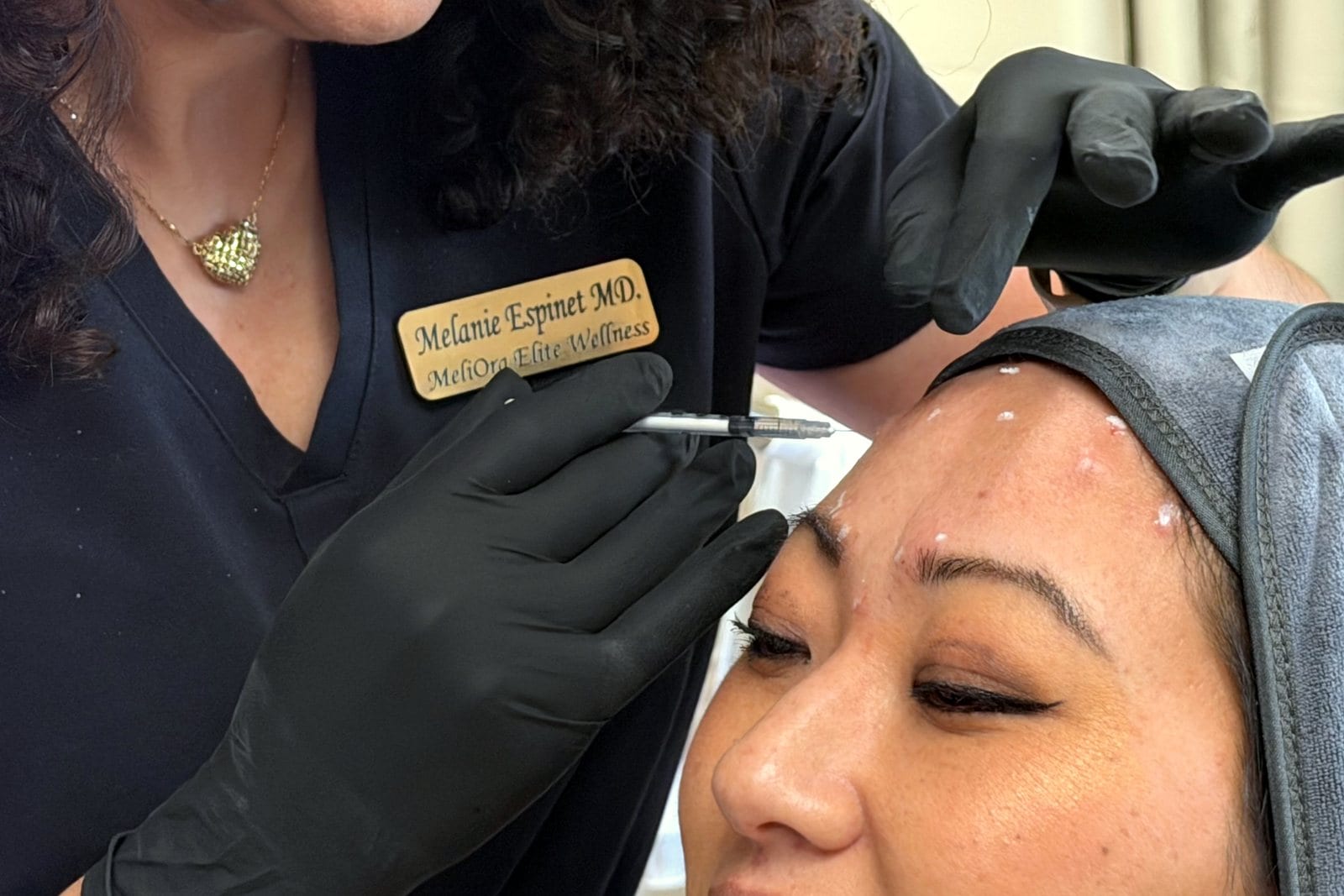
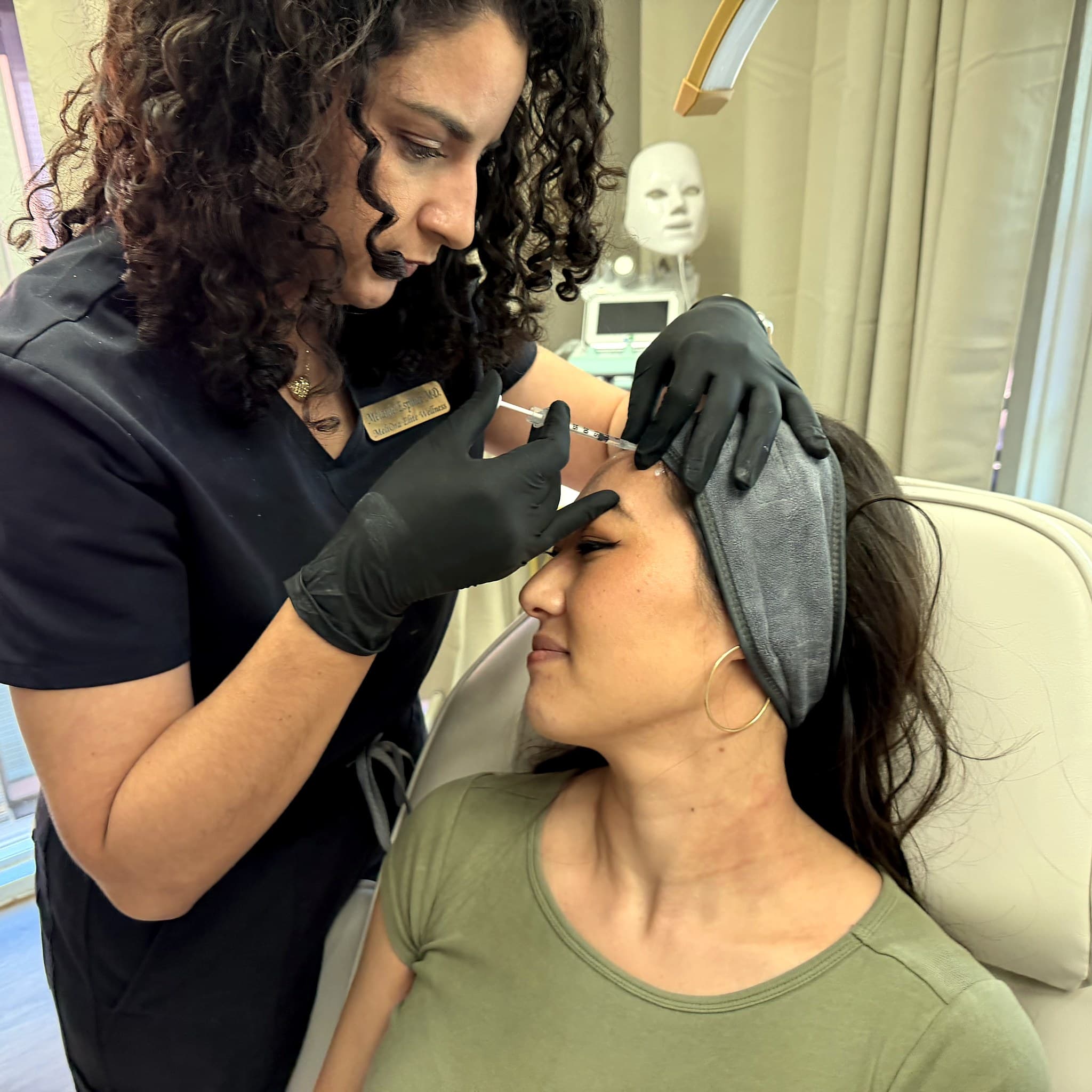
MeliOra Elite Wellness offers Botox with Jeuveau or Xeomin and no dermal fillers. Dr. Melanie Espinet, a board-certified family physician, watches how your face moves, tells you honestly whether your lines are the kind Botox helps, and places every injection. Botox with Jeuveau or Xeomin is $12/unit. She comes to your home or office anywhere in the Tampa Bay service area with no travel fee, and select appointments are available at the Lutz office.
If your main concern is volume, Dr. Espinet will tell you, and a licensed provider experienced in dermatology or plastic surgery, as the FDA recommends, is the right next stop for filler. If your concern is lines that move, book a Botox visit.
Frequently asked questions
What is the difference between Botox and fillers?
Botox relaxes muscles, and fillers add volume. Botox is an injectable drug that keeps targeted muscles from tightening, so lines you make when you move soften. Dermal fillers are gel implants placed under the skin to smooth folds or restore fullness.
Is Botox a filler?
No. The FDA states that botulinum toxin products such as Botox are not dermal fillers. They are injectable drugs that relax muscles, while fillers are gels regulated as medical devices.
Is Botox or filler better for wrinkles?
Botox is usually better for lines that appear when you move, and filler is usually better for folds and lost volume. Frown lines, forehead lines, and crow’s feet are typical Botox areas. The folds from the nose to the corners of the mouth are a typical filler area.
Which lasts longer, Botox or filler?
Filler usually lasts longer. Botox typically lasts about three to four months, while hyaluronic acid filler lasts about 4 to 12 months and some other fillers last a year or more, according to the American Academy of Dermatology.
What are dynamic and static wrinkles?
Dynamic wrinkles appear when a muscle contracts, and static wrinkles stay visible at rest. Botox gives its most dramatic results on dynamic wrinkles, while static wrinkles respond less fully to relaxing the muscle.
Should I get Botox or filler for forehead lines?
Botox is the usual choice for forehead lines, because they come from the muscle that lifts your brows. Xeomin is FDA-approved for forehead lines, and the FDA lists filler injection into the forehead among uses it has not approved.
Can you get Botox and fillers at the same time?
Some people do, but the FDA says the safe use of fillers together with Botox hasn’t been evaluated in a controlled clinical study. Decide with your injector, and tell each provider exactly what you’ve had, where, and when.
Does MeliOra offer fillers?
No. MeliOra doesn’t offer dermal fillers of any kind. MeliOra offers Botox with Jeuveau or Xeomin at $12/unit, and every injection is placed by Dr. Melanie Espinet, a board-certified physician.
Related Services
Sources & References
Ready to take the next step?
Serving Lutz, Wesley Chapel, Land O'Lakes, Carrollwood, New Tampa & greater Tampa Bay.
Book Your Consultation