The short answerGLP-1 (glucagon-like peptide-1) is a hormone your gut releases when you eat. It tells your brain you are full, slows how fast your stomach empties, and helps your body release insulin when blood sugar rises. GLP-1 medications, such as semaglutide and tirzepatide, copy that signal but last days instead of minutes, which is why they can lower appetite and body weight.
What is GLP-1, and why is everyone talking about it? It is one of your body’s own appetite and blood sugar hormones, and it is the model for a whole class of diabetes and weight management medicines. Below, Dr. Melanie Espinet, a board-certified family physician in Lutz, explains what the hormone does, how GLP-1 medications work, and which brands belong to the class. If you are mainly comparing shots for weight loss, our guide to weight loss injections covers types, trial results, and cost.
What is GLP-1?
GLP-1 stands for glucagon-like peptide-1. It is a small hormone made mostly by special cells in the lining of your lower small intestine and colon, called L-cells. A small group of nerve cells in the brainstem makes GLP-1 too. When food reaches your gut, sugars, fats, and proteins all prompt the L-cells to release it.
GLP-1 belongs to a family called incretin hormones. These are gut hormones that boost insulin release after a meal, so your body handles the sugar from food more smoothly. Natural GLP-1 is very short-lived: its half-life is only about 1 to 2 minutes, because an enzyme called DPP-4 and the kidneys clear it quickly.
What does GLP-1 do in the body?
In the short window after a meal, GLP-1 sends several signals at once:
- It helps signal fullness, curbing appetite and how much you eat
- It slows how quickly food leaves your stomach
- It helps the pancreas release insulin, but only when blood sugar is rising, which is why it is called glucose-dependent
- It suppresses glucagon, a hormone that raises blood sugar
Because your own GLP-1 is cleared within minutes, its effect after each meal is brief. That rise and fall is part of normal appetite control. A GLP-1 medication is different: it is built to keep the same signal going for days.
What is a GLP-1 agonist?
A GLP-1 agonist, or GLP-1 receptor agonist, is a medication that binds to and switches on the same receptor your natural GLP-1 uses. “Agonist” simply means activator. The difference is staying power. Semaglutide is built on the hormone’s own structure, but it is modified to resist DPP-4 and to bind albumin, a protein in your blood, so its half-life is about one week. Tirzepatide’s is about five days. That is why both are taken once a week, while your natural GLP-1 is gone in minutes.
Some medications act on more than one hormone. Tirzepatide activates both the GLP-1 receptor and the receptor for GIP, another gut hormone, so its label calls it a GIP and GLP-1 receptor agonist. It is still part of the GLP-1 family.
How do GLP-1 medications work for weight loss?
GLP-1 medications mainly work by turning down appetite. GLP-1 receptors sit in several areas of the brain involved in appetite, and the prescribing information for semaglutide and tirzepatide says both lower calorie intake, an effect likely driven by appetite. Both labels also note that these medicines lower weight with more fat lost than lean mass. They slow stomach emptying too; for tirzepatide, the label says that delay is largest after the first dose and fades over time.
These medicines also lower blood sugar by helping the pancreas release insulin when glucose is high, which is why several of them were first developed for type 2 diabetes. For weight management, the labels say they are meant to be used with a reduced-calorie diet and more physical activity, not instead of them, with a physician following how you respond and adjusting the dose.
GLP-1 medications list: FDA-approved brands and generic names
The generic name is the medicine itself, such as semaglutide. The brand name belongs to the company that sells it. One medicine can carry several brand names with different labeled uses, which is why Ozempic and Wegovy are both semaglutide. Here are the GLP-1 medications whose current U.S. prescribing information we reviewed for this article:
| Brand name (generic name) | Form and main labeled use |
|---|
| Wegovy (semaglutide) | Weekly injection or daily tablet. Weight management and heart risk reduction; the injection is also labeled for a liver condition called MASH |
|---|
| Ozempic (semaglutide) | Weekly injection. Type 2 diabetes, plus heart and kidney risk reduction in some adults with type 2 diabetes |
|---|
| Rybelsus and Ozempic tablets (semaglutide) | Daily tablet. Type 2 diabetes, plus heart risk reduction in some adults with type 2 diabetes |
|---|
| Zepbound (tirzepatide) | Weekly injection. Weight management, and moderate to severe sleep apnea in adults with obesity |
|---|
| Mounjaro (tirzepatide) | Weekly injection. Type 2 diabetes, plus heart risk reduction in some adults with type 2 diabetes |
|---|
| Saxenda (liraglutide) | Daily injection. Weight management in adults, and in children 12 and older with obesity who weigh more than 60 kg (about 132 pounds) |
|---|
| Victoza (liraglutide) | Daily injection. Type 2 diabetes in adults and children 10 and older, plus heart risk reduction in some adults with type 2 diabetes |
|---|
| Trulicity (dulaglutide) | Weekly injection. Type 2 diabetes in adults and children 10 and older, plus heart risk reduction in some adults with type 2 diabetes |
|---|
| Foundayo (orforglipron) | Daily tablet, taken with or without food. Weight management in adults |
|---|
This list covers the brands people ask about most, not every GLP-1 ever made. The weight-management labels all say not to combine the medicine with another GLP-1 medicine. For brand-by-brand detail, see Wegovy vs. Ozempic, Mounjaro vs. Zepbound, and liraglutide vs. semaglutide.
GLP-1 pills vs. injections: what is the difference?
GLP-1 medicine now comes in two forms: shots given under the skin and tablets taken by mouth. They work on the same receptor, but daily life on each looks different.
| Question | Injections vs. tablets |
|---|
| How often? | Semaglutide, tirzepatide, and dulaglutide shots are weekly; liraglutide shots are daily. GLP-1 tablets are taken every day |
|---|
| Food and timing rules | Weekly shots can be taken any time of day, with or without meals. Semaglutide tablets are taken in the morning on an empty stomach with up to 4 ounces of plain water, then you wait at least 30 minutes before eating, drinking, or taking other pills. Orforglipron tablets can be taken with or without food |
|---|
| Labeled for weight management | Injections: Wegovy, Zepbound, Saxenda. Tablets: Wegovy tablets, Foundayo |
|---|
| Same family warnings | Both forms carry the thyroid tumor boxed warning and similar stomach side effects |
|---|
This comparison is for your information only. MeliOra’s GLP-1 care uses once-weekly injections, semaglutide or tirzepatide, and we do not offer GLP-1 pills. If a tablet appeals to you, that is a good question to raise with your own doctor.
Who can take a GLP-1, and who should not?
For weight management, the labels cover adults with obesity, or adults with overweight plus at least one weight-related health problem. The NIH’s NIDDK puts that in numbers: a BMI of 30 or more, or 27 or more with a condition such as high blood pressure or type 2 diabetes. It also notes these medicines are not for everyone with a high BMI. GLP-1 labels say not to use them if you have:
- A personal or family history of medullary thyroid carcinoma (MTC)
- Multiple endocrine neoplasia syndrome type 2 (MEN 2)
- A past serious allergic reaction to the medicine
Other situations call for extra care. The labels say these medicines are not recommended with severe gastroparesis, that taking them with insulin or a sulfonylurea can raise the risk of low blood sugar, and that anyone planning surgery or sedation for you needs to know you take one. They also warn about pancreatitis, gallbladder problems, and kidney injury from dehydration, so tell your physician about any past trouble in those areas. For weight management, the Wegovy label says to stop semaglutide when pregnancy is recognized, and at least 2 months before a planned pregnancy. Only a physician who knows your full history should decide whether a GLP-1 is right for you.
Common GLP-1 side effects
The most common side effects are digestive: nausea, diarrhea, vomiting, constipation, and stomach pain. They are often strongest after starting or raising a dose. GLP-1 labels also carry a boxed warning about thyroid C-cell tumors, which GLP-1 drugs have caused in rodents; whether they do in people is not known. For what helps and when to call, read about semaglutide side effects and tirzepatide side effects.
How MeliOra fits: physician-led GLP-1 care in Lutz and Tampa Bay
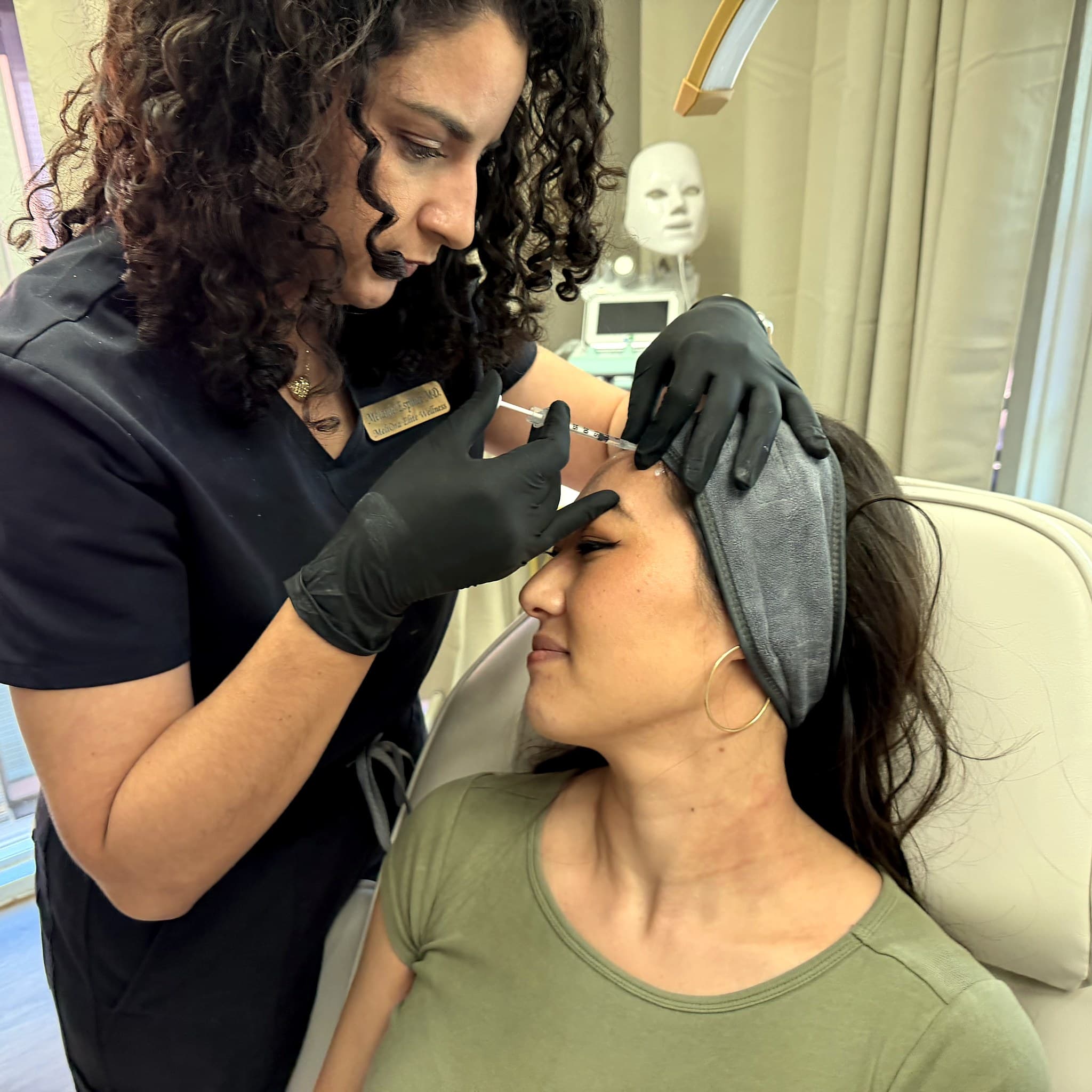
At MeliOra, Dr. Espinet prescribes semaglutide or tirzepatide and explains your medication at your visit. She evaluates you first, and if a GLP-1 is not right for you, she tells you so. Semaglutide weight loss starts at $150/month and tirzepatide weight loss starts at $230/month. Your monthly price includes physician visits, lab work, the medication and supplies, and dose adjustments and check-ins, with no consultation fee.
Dr. Espinet comes to your home or office anywhere in our Tampa Bay service area, from Lutz and Wesley Chapel to Tampa, Brandon, and Clearwater, with no travel fee. Select appointments are available at the Lutz office. If you live elsewhere in Florida, you can start with a telehealth weight loss visit at the same monthly price. See every option on our medical weight loss page.
Frequently asked questions
What does GLP-1 stand for?
GLP-1 stands for glucagon-like peptide-1. It is a hormone made mainly by cells in the lining of your lower gut after you eat, and it helps control appetite, stomach emptying, and blood sugar.
Is semaglutide a GLP-1?
Yes. Semaglutide is a GLP-1 receptor agonist, built on the structure of your natural GLP-1 hormone but made to last about a week. It is sold as Ozempic and Rybelsus for type 2 diabetes and as Wegovy for weight management.
Is tirzepatide a GLP-1?
Yes, and it also acts on a second hormone. Tirzepatide activates both the GLP-1 receptor and the GIP receptor, so its label calls it a GIP and GLP-1 receptor agonist. It is sold as Mounjaro for type 2 diabetes and as Zepbound for weight management.
What is the difference between GLP-1 and a GLP-1 agonist?
GLP-1 is the natural hormone your body makes, and a GLP-1 agonist is a medication that activates the same receptor. Natural GLP-1 has a half-life of about 1 to 2 minutes, while medications like semaglutide and tirzepatide are designed to keep working for days.
Are GLP-1 medications only for weight loss?
No. Many GLP-1 medications are labeled for type 2 diabetes, and some also lower the risk of heart events or kidney decline in certain adults. Only some brands, such as Wegovy, Zepbound, Saxenda, and Foundayo, are labeled for weight management.
Is there a GLP-1 pill?
Yes. Wegovy tablets and Foundayo are daily GLP-1 pills labeled for weight management, and Rybelsus and Ozempic tablets are labeled for type 2 diabetes. MeliOra does not offer GLP-1 pills; our GLP-1 care uses once-weekly semaglutide or tirzepatide injections.
Can you take two GLP-1 medications at the same time?
No. The labels for GLP-1 weight-management medicines say not to combine them with any other GLP-1 medicine. If you are switching, your doctor sets the timing and starting dose.
Who should not take a GLP-1 medication?
People with a personal or family history of medullary thyroid carcinoma or MEN 2, and anyone who has had a serious allergic reaction to the medicine, should not take one. For weight loss, they should not be used during pregnancy, and severe gastroparesis or use of insulin or a sulfonylurea calls for a careful talk with your physician first.
Related Services
Sources & References
- Müller TD, et al. Glucagon-like peptide 1 (GLP-1). Mol Metab. 2019;30:72-130
- WEGOVY (semaglutide) injection and tablets, Prescribing Information, Novo Nordisk
- ZEPBOUND (tirzepatide) injection, Prescribing Information, Eli Lilly
- RYBELSUS and OZEMPIC (semaglutide) tablets, Prescribing Information, Novo Nordisk
- FOUNDAYO (orforglipron) tablets, Prescribing Information, Eli Lilly
- OZEMPIC (semaglutide) injection, Prescribing Information, Novo Nordisk
- MOUNJARO (tirzepatide) injection, Prescribing Information, Eli Lilly
- SAXENDA (liraglutide) injection, Prescribing Information, Novo Nordisk
- VICTOZA (liraglutide) injection, Prescribing Information, Novo Nordisk
- TRULICITY (dulaglutide) injection, Prescribing Information, Eli Lilly
- NIDDK (NIH): Prescription Medications to Treat Overweight and Obesity
Ready to take the next step?
Serving Lutz, Wesley Chapel, Land O'Lakes, Carrollwood, New Tampa & greater Tampa Bay.
Book Your Consultation