The short answerMicrodosing tirzepatide means taking less than the labeled 2.5 mg weekly starting dose, or spacing doses further apart, usually to ease side effects or stretch the cost. It is off-label, and no published randomized trial has tested it, so no one can yet say whether it works or how safe it is. The labeled schedule already starts low and climbs slowly, and the labels give the reason: to limit stomach side effects.
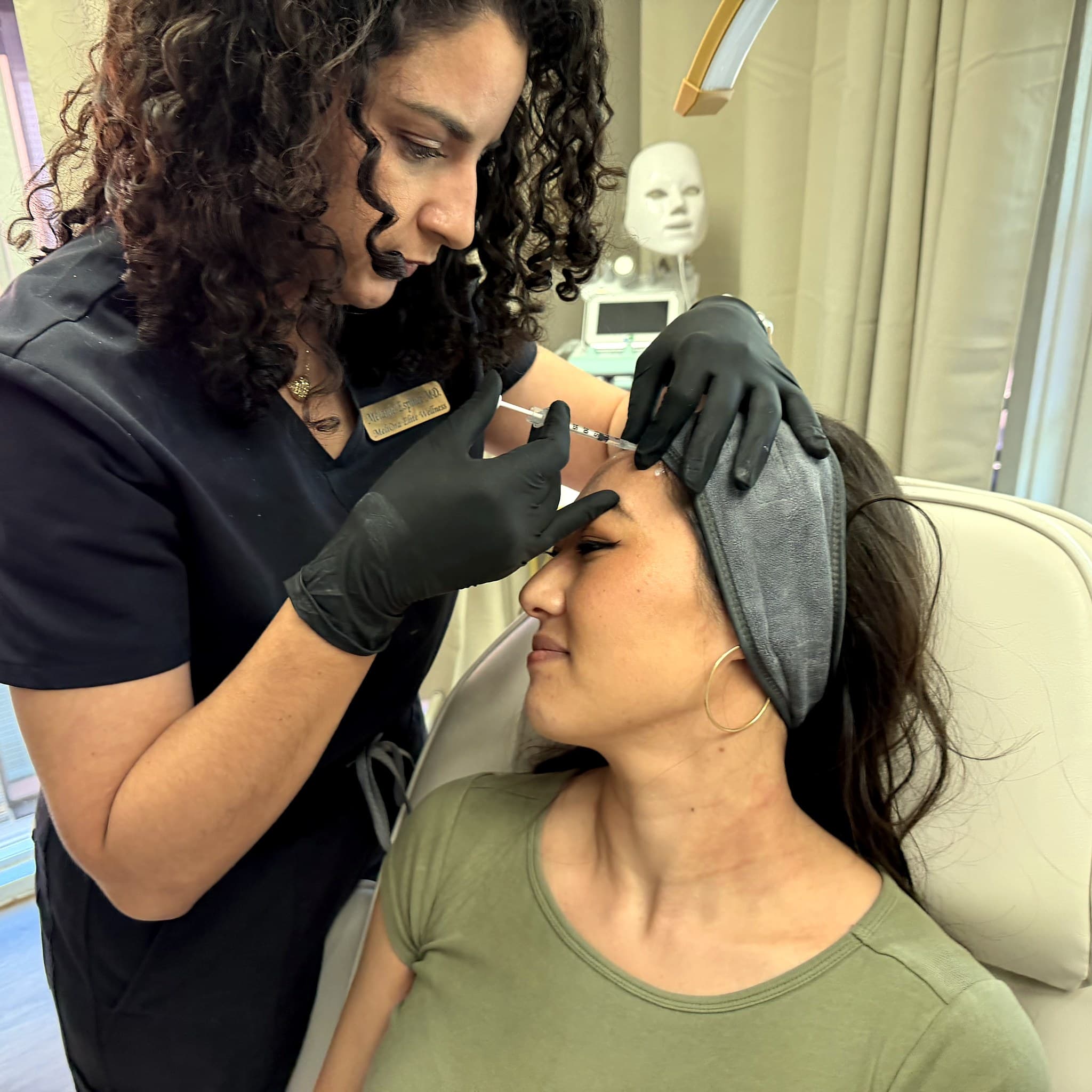
If you have searched for microdosing tirzepatide or semaglutide, you have probably seen posts promising the benefits of a GLP-1 with fewer side effects at a fraction of the price. This guide explains what people actually mean by microdosing, why the standard dose schedule looks the way it does, and what the research does and does not show. It comes from MeliOra, where board-certified family physician Dr. Melanie Espinet sets and adjusts every patient’s dose herself as part of physician-led medical weight loss in Lutz.
What is GLP-1 microdosing?
GLP-1 microdosing is an informal term, not a medical protocol. A 2026 commentary in the journal Expert Opinion on Pharmacotherapy describes it as using 25 to 50% of the manufacturer’s recommended starting dose, or stretching the time between doses. The same authors list the usual reasons people try it:
- To ease nausea and other stomach side effects
- To make an expensive medication last longer
- To keep taking something when supply was short
They describe two common methods: counting clicks on a multi-dose pen to deliver less than a full dose, and taking a standard dose less often than once a week. They also state plainly that high-quality evidence for microdosing is essentially absent.
Taking a medicine at a dose its label does not describe is what the FDA calls off-label, or unapproved, use. Doctors may prescribe off-label when they judge it medically appropriate, but it means the FDA has not determined the drug is safe and effective used that way. If you are new to these medicines, our guide to GLP-1 medications explains how they work.
Why GLP-1 doses start low: how the label schedule works
The labels for both weekly weight-loss injections already build in a slow start. Each one says its step-by-step increases are there to reduce the risk of stomach side effects such as nausea, vomiting, and diarrhea.
| Label schedule | Weekly dose |
|---|
| Zepbound (tirzepatide), weeks 1 to 4 | 2.5 mg, a starting dose only |
|---|
| Zepbound, after at least 4 weeks | 5 mg, then up in 2.5 mg steps no sooner than every 4 weeks |
|---|
| Zepbound maintenance for weight | 5 mg, 10 mg, or 15 mg (15 mg is the maximum) |
|---|
| Wegovy (semaglutide), weeks 1 to 4 | 0.25 mg |
|---|
| Wegovy, weeks 5 to 16 | 0.5 mg, then 1 mg, then 1.7 mg, 4 weeks each |
|---|
| Wegovy maintenance for weight in adults | 1.7 mg or 2.4 mg (2.4 mg recommended), with up to 7.2 mg allowed for some adults |
|---|
The labels also give doctors room to slow down. The Wegovy label says to consider delaying the next increase by 4 weeks if a dose is not tolerated. The Zepbound label says to consider a lower maintenance dose if a maintenance dose is not tolerated. Those are tested, on-label ways to manage side effects, and they come before anything off-label.
Microdosing tirzepatide: what people mean in practice
With tirzepatide, microdosing usually means taking a quarter to a half of the 2.5 mg starting dose, or keeping a standard dose and spacing it out. The Zepbound label is clear that 2.5 mg is for starting treatment and is not approved as a maintenance dose, so anything below it sits outside what was studied.
Many of the methods shared online involve multi-dose tirzepatide pens, each of which holds four fixed weekly doses. A 2026 commentary in the journal Obesity notes that these pens use unnumbered clicks and were not designed or studied for delivering smaller doses. The authors see a possible role for lower doses in carefully chosen patients with close follow-up. Even so, they describe the practice as not endorsed by the manufacturer or approved by any regulatory agency, and they note how little research exists on how fractional doses behave in the body, how safe they are, or whether they work.
Dose accuracy is the practical worry. The same authors point out that dosing errors are more likely for people with poor eyesight, limited hand dexterity, or limited health literacy. They also note that using a pen past its labeled in-use period raises the risk of contamination and infection.
Microdosing semaglutide vs. low-dose semaglutide
Microdosing semaglutide follows the same idea: a fraction of the 0.25 mg starting dose, or a standard dose given less often than weekly. That is different from low-dose semaglutide on the label. In the Wegovy schedule, 0.25 mg and 0.5 mg are starting and step-up doses, and the maintenance dose for weight reduction in adults is 1.7 mg or 2.4 mg.
The Wegovy label describes one trial that compared two maintenance doses directly. In 401 East Asian adults followed for 68 weeks, average weight loss was 9.6% on 1.7 mg and 13.2% on 2.4 mg, compared with 2.1% on placebo. For weight loss in adults, the label lists 0.25 mg, 0.5 mg, and 1 mg only as steps on the way to a maintenance dose, not as maintenance doses themselves.
Does microdosing GLP-1 work for weight loss?
The honest answer is that no one knows, because microdosing has not been tested in a published randomized trial. What the trials do show is a dose pattern: on average, lower doses produced less weight loss.
| Dose and study | Average weight loss |
|---|
| Zepbound 15 mg weekly, 72 weeks (label Study 1) | 20.9% |
|---|
| Zepbound 10 mg weekly, same trial | 19.5% |
|---|
| Zepbound 5 mg weekly, same trial | 15.0% |
|---|
| Placebo, same trial | 3.1% |
|---|
| Wegovy 2.4 mg weekly, 68 weeks (label Study 6) | 13.2% |
|---|
| Wegovy 1.7 mg weekly, same trial | 9.6% |
|---|
| Tirzepatide kept at 2.5 mg for 6 months or more (records study, 12 months) | 5.5% |
|---|
| Semaglutide kept at 0.25 mg for 6 months or more (same records study) | 2.2% |
|---|
| True microdoses below the starting dose | No trial data |
|---|
Zepbound Study 1 enrolled 2,539 adults with obesity, or overweight plus a weight-related condition, who did not have type 2 diabetes. The records rows come from a 2026 analysis of health records, not a trial. It followed people whose prescriptions stayed at the lowest starting dose for at least six months. The authors caution that this pattern may overlap with microdosing but does not establish it, and that they could not tell deliberate low dosing apart from missed doses. Numbers from different studies also are not directly comparable, because the people and methods differ.
Does a lower dose mean fewer side effects?
Sometimes, but not reliably. The microdosing commentary mentions early reports of less nausea and better adherence, while stressing that the evidence is limited. The Zepbound label shows that side effects do not disappear at the lowest maintenance dose:
Placebo vs 5 mg vs 10 mg vs 15 mg| Side effect in the Zepbound weight trials | Placebo | 5 mg | 10 mg | 15 mg |
|---|
| Nausea | 8% | 25% | 29% | 28% |
|---|
| Diarrhea | 8% | 19% | 21% | 23% |
|---|
| Vomiting | 2% | 8% | 11% | 13% |
|---|
| Constipation | 5% | 17% | 14% | 11% |
|---|
Nausea was about as common on 5 mg as on 15 mg, and constipation was more common at the lower dose. Vomiting and diarrhea did rise with dose. The label’s own answer to side effects is the pace of increases, which is why the schedule starts low. Everyday habits help too, and our guides to tirzepatide side effects and semaglutide side effects cover what works and when to call your doctor.
The risks of microdosing on your own
- Dosing errors: pens and vials are made for fixed doses, so measuring a fraction depends on careful counting or math
- Contamination: using a pen past its labeled in-use period raises the risk of infection
- Unknown benefit: without trial data, there is no way to know whether a microdose does enough to be worth taking
- Missed warning signs: severe or lasting stomach pain, sometimes spreading to the back, can signal pancreatitis and needs prompt medical care, whatever the dose
None of these risks means a lower dose is wrong for everyone. They mean dose changes belong in a conversation with the physician who knows your history, not in a comment thread.
Can a lower dose help you keep weight off?
Some people look into microdosing as a way to stay on a GLP-1 after reaching a goal. No published trial has tested microdoses as a maintenance plan. The weight-management labels do list more than one maintenance dose and ask doctors to weigh response and tolerance when choosing, so settling on a lower labeled dose is a reasonable discussion to have with your physician. What happens when people stop entirely is covered in our guide to stopping semaglutide, and stalls along the way in what to do about a GLP-1 plateau.
How MeliOra fits: a dose set and adjusted by your physician
At MeliOra Elite Wellness, Dr. Espinet sets and adjusts every patient’s semaglutide or tirzepatide dose herself. She starts low, raises the dose only when your response and tolerance support it, and can slow the pace or hold a step if side effects show up. The right dose is the one that works for you, which is not always the highest.
If cost or side effects are what drew you to microdosing, say so at your visit, because those are problems she works on with you directly. Semaglutide starts at $150/month and tirzepatide at $230/month, and your price follows your dose. The monthly price includes physician visits, lab work, medication and supplies, dose adjustments, and check-ins, with no consultation fee.
Visits happen at your home or office across Tampa Bay with no travel fee, at the Lutz office for select appointments, or by secure video visit anywhere in Florida. Learn more about tirzepatide in Lutz and Tampa and semaglutide in Lutz and Tampa.
Frequently asked questions
What is microdosing tirzepatide?
Microdosing tirzepatide means taking less than the 2.5 mg weekly starting dose, or spacing standard doses more than a week apart. It is an off-label practice that has not been tested in published clinical trials. People usually try it to ease side effects or lower the cost.
Is microdosing semaglutide safe?
Its safety has not been established, because microdosing semaglutide has not been studied in published clinical trials. The known risks are practical: measuring a fraction of a dose invites errors, the pens are made for fixed doses, and the benefit is unknown. Talk with your physician before changing your dose.
Does microdosing GLP-1 work for weight loss?
No one knows yet, because no published randomized trial has tested it. In the trials that exist, lower doses produced less weight loss on average: in the main Zepbound trial, 15.0% on 5 mg versus 20.9% on 15 mg over 72 weeks.
What is a low dose of semaglutide?
For Wegovy injection, 0.25 mg once a week is the starting dose for the first 4 weeks, followed by 0.5 mg, 1 mg, and 1.7 mg steps. The maintenance dose for weight reduction in adults is 1.7 mg or 2.4 mg, so the lower steps are meant for getting started, not for the long term.
What is the lowest dose of tirzepatide?
The lowest labeled dose of tirzepatide is 2.5 mg once a week, used for the first 4 weeks only. The Zepbound label says 2.5 mg is not approved as a maintenance dose, and the lowest maintenance dose for weight is 5 mg.
Does microdosing reduce side effects?
It might for some people, but that has not been proven. In the Zepbound trials, nausea affected 25% of people on the lowest maintenance dose of 5 mg, compared with 8% on placebo. The tested way to limit side effects is a slow, step-by-step increase, with pauses when needed.
Is microdosing GLP-1 medication off-label?
Yes. Taking a dose the label does not describe is off-label use, which means the FDA has not determined the medicine is safe and effective at that dose. Doctors may still prescribe off-label when they judge it medically appropriate.
Can I talk to Dr. Espinet about a lower dose?
Yes. Dr. Espinet sets and adjusts every patient’s dose at MeliOra, and she can slow your increases, hold a step, or discuss a lower maintenance dose based on how you respond. Bring your questions about cost and side effects to your visit.
Related Services
Sources & References
Ready to take the next step?
Serving Lutz, Wesley Chapel, Land O'Lakes, Carrollwood, New Tampa & greater Tampa Bay.
Book Your Consultation