The Pink Salt Trick: What’s in the Glass, and Who Should Skip It
Dr. Melanie Espinet, board-certified Family Medicine physician ·
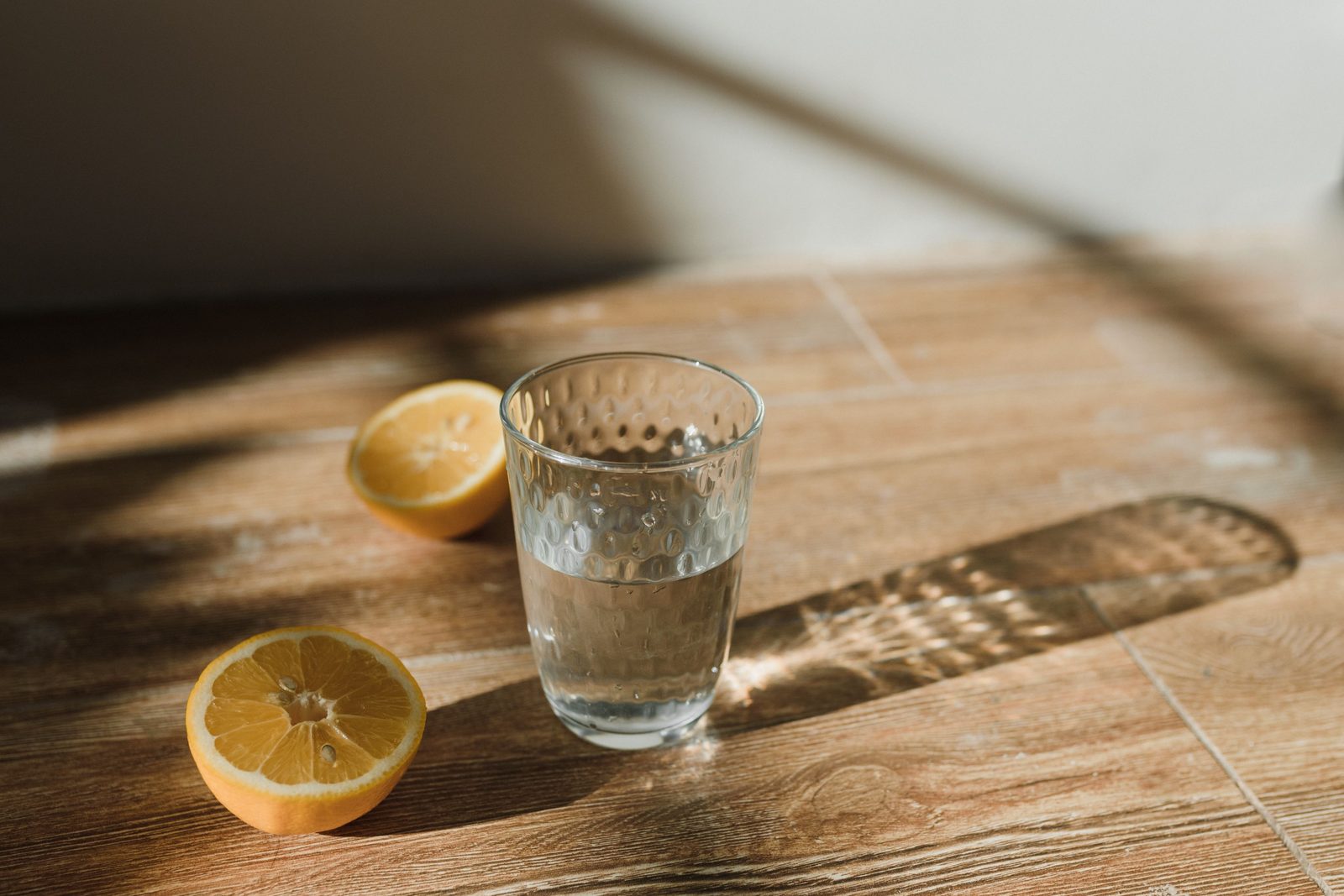
Stirred in, the pink salt trick looks like plain lemon water, yet a quarter teaspoon of salt adds roughly 500 mg of sodium. Photo: Arina Krasnikova on Pexels
The short answerThe pink salt trick is a glass of water with pink Himalayan salt and lemon juice, shared online as a weight loss hack. We found no study showing it causes weight loss. Pink salt is still salt: a quarter teaspoon adds roughly 500 mg of sodium, and its extra minerals are too small to matter. If you have high blood pressure, heart failure, or kidney disease, or take lithium, ask your clinician before trying it.
The pink salt trick spread through social media posts and ads in 2025. Below: the recipe as it’s shared, what pink salt holds next to table salt, a four-question test for any viral weight hack, and who should skip this one. For a medical approach, see our physician-led weight loss program. This is general information, not medical advice.
What is the pink salt trick?
The pink salt trick is a drink of water mixed with pink Himalayan salt and lemon juice that social media posts say boosts metabolism, reduces bloating, and causes weight loss. It is salt water with lemon.
The pink salt trick recipe, as it’s usually shared
A glass of water
A small amount of pink Himalayan salt, which varies from post to post
Lemon juice
Stir and drink
Because amounts vary, the sodium math below uses a quarter teaspoon of salt as the example. Some versions add honey, which the 2025 to 2030 Dietary Guidelines count as an added sugar, so count it toward your carbohydrate if you have diabetes. A related salt drink, the adrenal cocktail, mixes salt with orange juice and has its own guide.
Why the pink salt trick is everywhere
Part of its reach is advertising. In January 2026 the Better Business Bureau said its Scam Tracker had received more than 170 reports in two months about a weight loss supplement marketed as a form of the pink salt trick, promoted with deepfake videos of celebrities and supposed physicians. Reports came from 35 states, including Florida, and described billing problems and pressure to buy more supplements. The BBB found that buyers were told to send returns to addresses in Lakeland and Largo, and FOX 13 in Tampa Bay covered the warning.
Does the pink salt trick work for weight loss?
We found no study testing the pink salt trick, or salt water, for weight loss (PubMed search, November 2026). A Missouri State University dietitian put it plainly in 2025: pink salt doesn’t speed up metabolism, detox the body, or cause weight loss, and the real benefit comes from hydration and replacing sugary drinks.
That last part is the honest takeaway. The 2025 to 2030 Dietary Guidelines say to choose water and unsweetened drinks and to avoid sugar-sweetened beverages. A glass of water in place of a soda is a real swap. The salt adds sodium, not weight loss. Our Oatzempic guide runs the same kind of check on a viral oat drink.
Pink Himalayan salt vs table salt
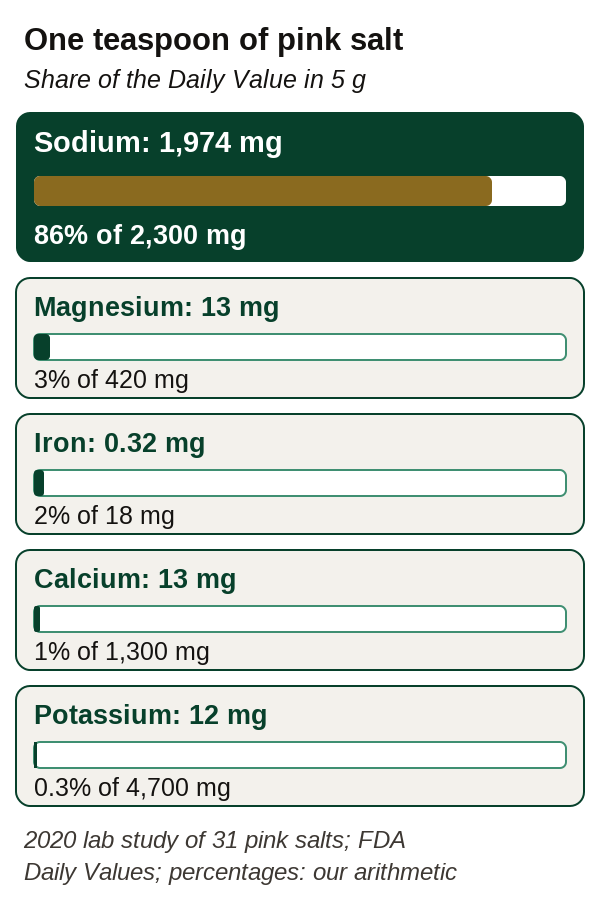
Pink salt is mostly sodium chloride, like table salt. A 2020 Australian lab study of 31 pink salts, funded by the research company that ran it, found more calcium, iron, magnesium, and potassium than in iodized table salt and slightly less sodium, about 39.5% by weight vs 42.8%. But the amounts were tiny: the authors estimated you’d need more than 30 g a day, about 6 teaspoons, for the minerals to count, far past any sodium limit. One sample, from Peru, held more lead than Australian food standards allow.
A teaspoon of pink salt covers most of a day’s sodium limit and only a sliver of any other mineral.
In people, swapping salts made no measurable difference. In a small 2022 Brazilian crossover trial, 17 women with high blood pressure used Himalayan salt for four weeks and table salt for four weeks, and their blood pressure and urine sodium didn’t differ.
One real difference is iodine. MedlinePlus calls iodized table salt the main food source of iodine, which the thyroid needs, and advises checking that salt is labeled iodized. If your pink salt doesn’t say so, don’t count on it for iodine, especially if you’re pregnant or breastfeeding, when you need more.
Trick or treatment? A four-question test for any viral weight hack
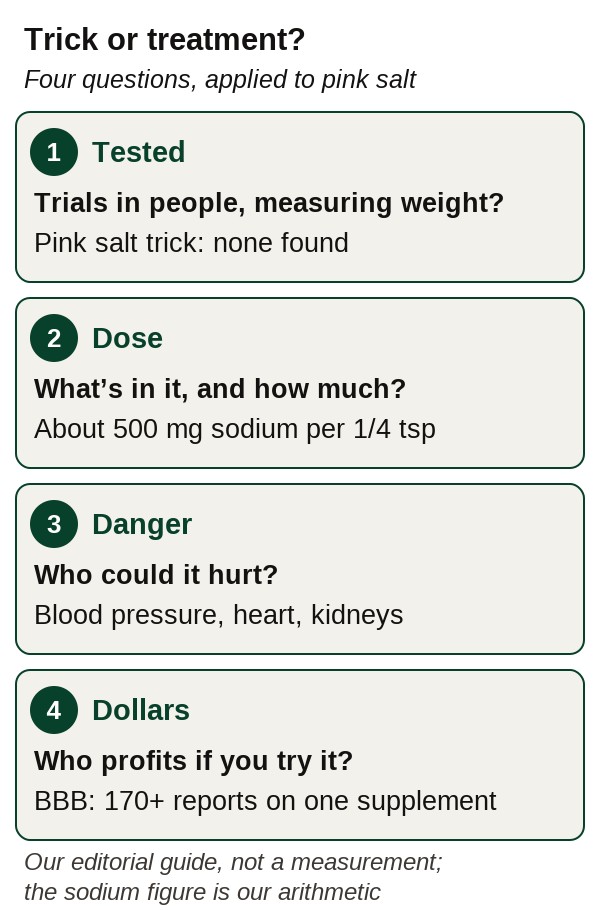
Our editorial tool, not a medical rule: four questions that sort a trick from a treatment. Here they are, applied to the pink salt trick.
1. Tested: has anyone tested it for weight loss in people?
For the pink salt trick, no. A treatment has trials in people, with a comparison group, that measured weight. A trick has testimonials. If a post cites a study, check that it tested the hack itself, not one ingredient in a different amount.
2. Dose: what is in it, and how much?
The FDA says 2,300 mg of sodium is about a teaspoon of table salt, and the Australian study found about 1,970 mg in a 5 g teaspoon of pink salt. So a quarter teaspoon adds roughly 500 mg, about a fifth of the less than 2,300 mg a day the Dietary Guidelines set for anyone 14 and older. Americans already average about 3,400 mg a day, the FDA says, so for most people the trick adds salt to a diet that’s already over the limit.
3. Danger: who could it hurt?
Sodium isn’t the enemy: the Dietary Guidelines call it essential for hydration and say very active people may need more to replace what they sweat out. But for some readers extra salt can do real harm, and a treatment comes with a list of who shouldn’t use it. A trick rarely does. The list for this one is in the next section.
4. Dollars: who profits if you try it?
Salt and lemons are cheap, so watch what the post sells next. The BBB says not to be quick to trust endorsements, because scammers use celebrity pictures and well-known logos without permission; research the company before you buy, and report a misleading ad to the FTC at 877-FTC-HELP. The BBB’s tips, as FOX 13 reported them, add caution with ads that promise miracle or immediate weight loss, or loss without diet or exercise.
Four questions to ask before trying any viral weight hack, applied here to the pink salt trick.
Want a medical opinion instead of a trick?Book a weight loss consultation with Dr. Espinet, a board-certified family medicine physician.
What about the coffee loophole?
The coffee loophole is another name in the same feeds: coffee, sometimes with add-ins or a supplement powder, pitched as a weight loss hack. Put it through the same four questions. We found no trial of it either (PubMed search, November 2026). On dose, the FDA says 400 mg of caffeine a day, about two to three 12-ounce cups of coffee, isn’t generally linked to negative effects for most adults, though sensitivity varies. Any powder sold alongside it has its own label to read. If you take a GLP-1 medicine, see our guide to Ozempic and coffee.
Who should skip the pink salt trick
Talk to your clinician before adding a salt drink if any of these fit you:
High blood pressure, or a doctor’s advice to cut salt
Heart failure: you may be asked to limit salt and fluids, sometimes to 1,500 to 2,300 mg of sodium a day
Kidney disease: extra sodium makes the body hold fluid, which raises blood pressure and strains the kidneys and heart
Lithium: keep to the salt and fluid amounts your doctor set, and don’t change them on your own
Pregnancy or breastfeeding, if switching salts would leave you without iodized salt
An eating disorder, now or in the past: never use salt water to make yourself vomit
Children: keep salt drinks away from kids, who can take in enough salt to be poisoned
Why blood pressure tops the list: in a 2023 trial funded mainly by the NIH, 213 adults aged 50 to 75 averaged about 8 points lower systolic blood pressure after a low-sodium week (about 500 mg a day) than after a high-sodium week (about 2,200 mg a day added to their usual diet), whether or not they had high blood pressure or took medicine for it. The FDA notes that uncontrolled high blood pressure raises the risk of heart attack, heart failure, stroke, and kidney disease. The NHLBI’s DASH eating plan notes that 1,500 mg of sodium a day lowers blood pressure even further than 2,300 mg; by our math, a quarter teaspoon of pink salt is about a third of that lower amount.
When to see a professional instead
See a clinician, not a recipe, if you’re skipping meals and drinking salt water instead, losing weight faster than you expected, or bingeing, purging, or restricting. Utah Poison Control warns that people sometimes use salt water to make themselves vomit, including with an eating disorder, and that it can cause dangerous salt poisoning. The ANAD Eating Disorder Helpline, 1-888-375-7767, answers weekdays from 10 a.m. to 10 p.m. Eastern, and our guide to how to stop food noise puts the eating disorder check first. For anything urgent, use this table.
If you notice
What to do
Thoughts of suicide or of harming yourself
Call or text 988 now, or call 911 if you are in danger
Fainting, chest pain, a racing or skipped heartbeat, or confusion, especially after vomiting, using laxatives, or eating very little
Call 911 or go to an emergency room now
Sudden numbness or weakness of the face, arm, or leg, especially on one side, sudden confusion or trouble speaking, sudden trouble seeing, sudden trouble walking or loss of balance, or a sudden severe headache with no known cause
Possible stroke. Call 911 right away, and don’t drive yourself
After swallowing a lot of salt or salt water, or a child getting into salt: strong thirst, dry mouth, restlessness, or tiredness, then a fast heartbeat, muscle spasms, or a seizure
Possible salt poisoning. Call Poison Help at 1-800-222-1222 right away; call 911 for a seizure, collapse, trouble breathing, or someone who can’t be woken
With heart failure: weight up more than 2 to 3 pounds in a day or 5 pounds in a week, new swelling in your feet, ankles, or legs, or shortness of breath at rest or lying down
Fluid may be building up. Contact your heart care team today
Bingeing, purging, or restricting, or losing weight on a GLP-1 faster than your prescriber expects (often more than 1 to 2 pounds a week)
See your clinician this week; the 2026 consensus treats fast loss as a possible eating disorder warning sign
This is general information, not medical advice. If you have heart failure, kidney disease, or high blood pressure, your own care team’s sodium target comes first.
How MeliOra fits: a physician instead of a pink salt hack
For medical weight loss, Dr. Melanie Espinet, a board-certified family medicine physician, prescribes weekly semaglutide or tirzepatide injections. She screens for eating disorders before prescribing, and if support from a dietitian or therapist would help, she discusses it at your consultation.
Semaglutide weight loss starts at $150/month, or $240/month at higher dosing, and tirzepatide weight loss runs $230 to $320/month. Each monthly price includes in-home physician visits, lab work, the medication and supplies, and dose adjustments and check-ins, with no consultation fee.
Dr. Espinet makes house calls across Hillsborough, Pasco, and Pinellas counties with no travel fee, and sees select appointments at the Lutz office. At any house call, including ours, ask how the product was stored on the way and what the plan is for a serious reaction. Anywhere in Florida, telehealth weight loss swaps in-home visits for video visits, ships the medication to your home, and costs the same each month.
Frequently asked questions about the pink salt trick
What is the pink salt trick recipe?
Posts mix pink Himalayan salt into a glass of water with lemon juice, and some add honey. Amounts vary from post to post. A quarter teaspoon of salt adds roughly 500 mg of sodium, about a fifth of the daily limit. We found no version of the recipe that has been tested for weight loss.
Does the pink salt trick work for weight loss?
We found no study showing it does. Pink salt doesn’t speed up metabolism or burn fat. If the drink replaces a soda or a sweet coffee, you skip those calories, and water helps you stay hydrated, but the salt itself adds only sodium. Anyone selling it as a fat burner is selling a claim without evidence.
Is pink Himalayan salt healthier than table salt?
Not in a way that matters. A 2020 lab study found pink salt has slightly less sodium by weight and more minerals, but you would need more than 30 g a day for those minerals to count. A small trial in women with high blood pressure found no blood pressure difference. Unless it says iodized, it may lack iodine.
How much sodium is in the pink salt trick?
It depends on the scoop. A 5 g teaspoon of pink salt held about 1,970 mg of sodium in a 2020 lab study, so a quarter teaspoon adds roughly 500 mg. The Dietary Guidelines set the limit at less than 2,300 mg a day, and the average American already eats about 3,400 mg.
Who should not try the pink salt trick?
Skip it, or ask first, if you have high blood pressure, heart failure, or kidney disease, take lithium, rely on iodized salt during pregnancy or breastfeeding, or have an eating disorder history. Never use salt water to make yourself vomit, and keep salt drinks away from children. Both can lead to salt poisoning.
What is the coffee loophole?
It’s another viral weight loss hack: coffee, sometimes with add-ins or a supplement powder. We found no trial of it. The FDA says 400 mg of caffeine a day, about two to three 12-ounce cups of coffee, isn’t generally linked to negative effects for most adults.