Blog · Wellness Shots
Amino Acid Injections: What a Shot Can Add When Your Protein Comes From Food
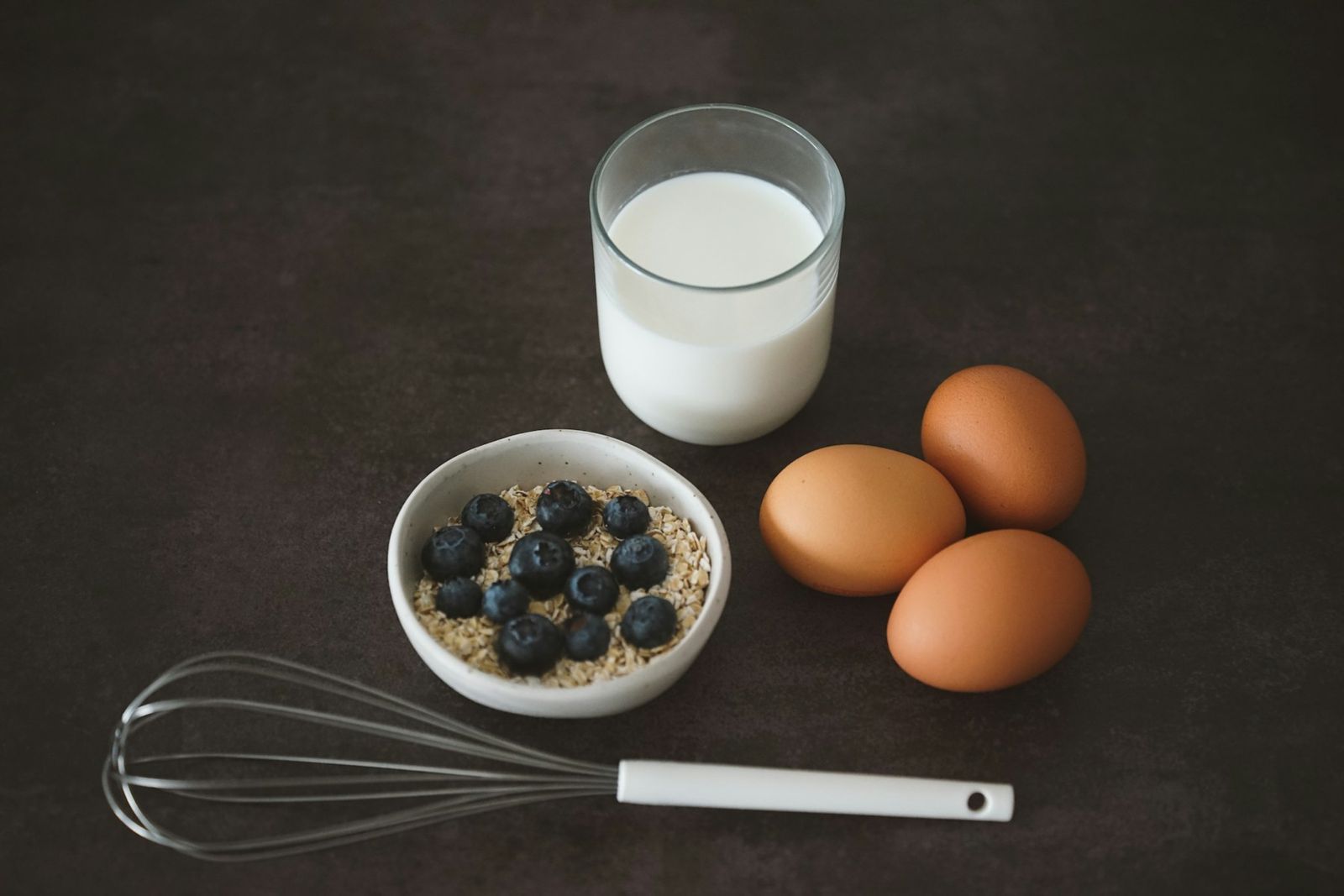
Most people get the amino acids they need from food like this, which is where the Gram Gap check starts. Photo: Irene Fernandez on Unsplash
Blog · Wellness Shots
Most people get the amino acids they need from food like this, which is where the Gram Gap check starts. Photo: Irene Fernandez on Unsplash
On MeliOra’s menu, the shot listed as an amino acid blend is BLean, offered as optional nutrient support, not as a treatment. Ask at your consultation what’s in it and how it’s given. The full menu is on our wellness shots in Lutz page.
Amino acid injections are shots or IV infusions that deliver amino acids, the molecules your body links together to build protein, without digesting food first. Hospitals use them to feed people who can’t eat; wellness menus sell amino acid blends as quick shots. Blends differ from clinic to clinic, so ask for the ingredient list and the amount of each before any shot.
Nine amino acids are essential: your body can’t make them, so they must come from food, and it makes the rest, though a few become essential during illness or stress, according to MedlinePlus. You don’t need every one at every meal; a balance over the day is what counts. Your body doesn’t store protein the way it stores fat, so you need some every day.
When someone can’t or shouldn’t eat or be tube-fed, a formula given through a vein can supply most of their nutrients, with regular blood tests to check it, explains MedlinePlus. One labeled amino acid solution for this use holds 10 grams of amino acids in every 100 mL. For a stable adult, its label calls for 8 to 10 mL per kilogram a day, mixed by a pharmacy with other nutrients. For someone who weighs 70 kg (154 pounds), that’s 560 to 700 mL a day.
That is the scale at which injected amino acids feed a person: hundreds of milliliters a day, into a vein, with lab checks. MeliOra doesn’t offer IV drips, and a quick wellness shot is a different product with a different purpose. Our glutathione injection guide takes the same evidence-first look at another shot on our menu.
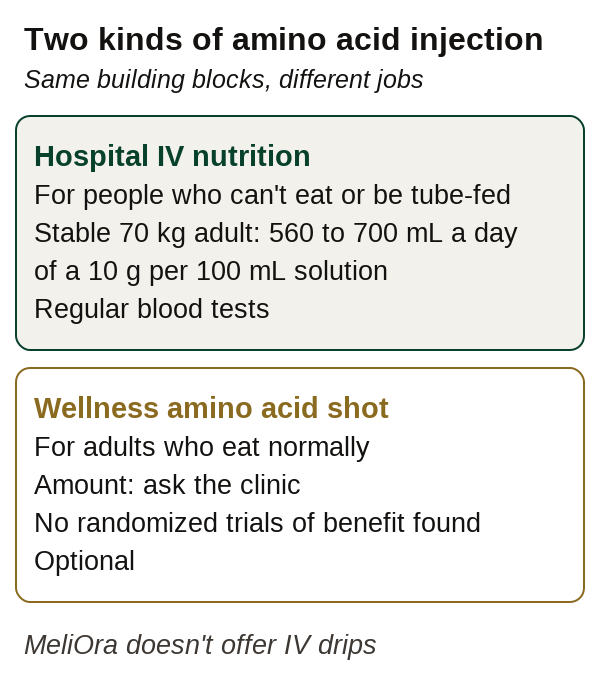
If you’re wondering whether an amino acid shot gives you more energy, more muscle, or weight loss, here is the honest answer. We searched PubMed on November 14, 2026, for trials of amino acid injections for energy, fatigue, weight loss, or muscle in healthy adults and found no randomized trial. That doesn’t prove they do nothing. It means the benefits haven’t been tested in a way that could show them.
Here is the contrarian part. A 2025 joint advisory from four lifestyle, nutrition, and obesity medicine groups on eating well during GLP-1 treatment, including how to protect muscle, never mentions amino acid shots; the word “amino” doesn’t appear in its full text. For protein gaps it points to protein-rich foods first, then high-protein shakes, bars, and fortified foods. It adds that more protein alone is likely not enough to keep muscle without strength training, and that protein beyond what muscles need can be turned into fat by the liver. Gelatin, the protein in the viral gelatin trick, brought only brief fullness in its studies.
We found no trial showing that amino acid shots cause weight loss, and MeliOra makes no weight-loss claim for BLean. If weight is the goal, our medical weight loss program uses prescription GLP-1 medicines with physician visits and lab work. Lipotropic shots, which usually include the amino acid methionine and sometimes L-carnitine, get their own evidence review in Lipo-C injections.
That worry is reasonable, because a smaller appetite makes protein easy to miss. The advisory suggests eating protein first at meals and offers a simple fixed target of 80 to 120 grams a day, alongside strength training. Our guides to muscle loss on a GLP-1 and what to eat on semaglutide go further. Creatine, a different supplement, has its own evidence; see creatine for women.
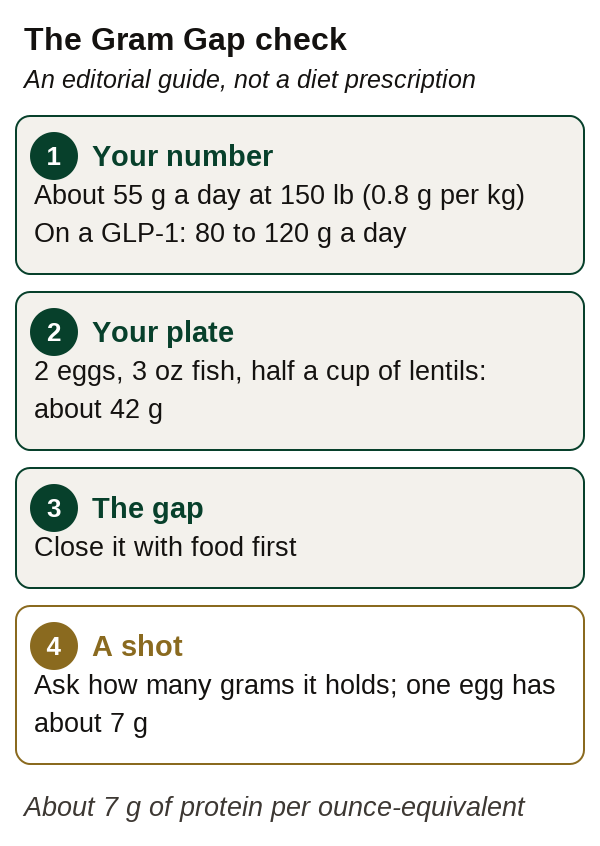
The Gram Gap check is our editorial guide for deciding whether you have a protein gap at all, and what closes it. It isn’t a diet prescription. If you have kidney or liver disease, or a history of an eating disorder, ask your physician for your number instead.
The numbers in steps 1 and 2 come from the advisory and from MedlinePlus. Two eggs, 3 ounces of fish, and half a cup of lentils come to about 42 grams, before any dairy, nuts, or grains.
Step 4 is where scale matters. Feeding a stable 70 kg adult by vein takes 560 to 700 mL of hospital amino acid solution a day. Ask how many grams of amino acids a shot holds and compare it with food: one egg or an ounce of fish has about 7 grams. In our editorial judgment, food comes first. If you can’t eat enough because of a small appetite, nausea, or a GLP-1 medicine, talk with your prescriber or a registered dietitian, who may suggest shakes or fortified foods, as the advisory does. Our protein guide for GLP-1 patients lists the benchmarks.
Curious whether BLean fits you? Book a visit and ask what’s in it and how it’s given.
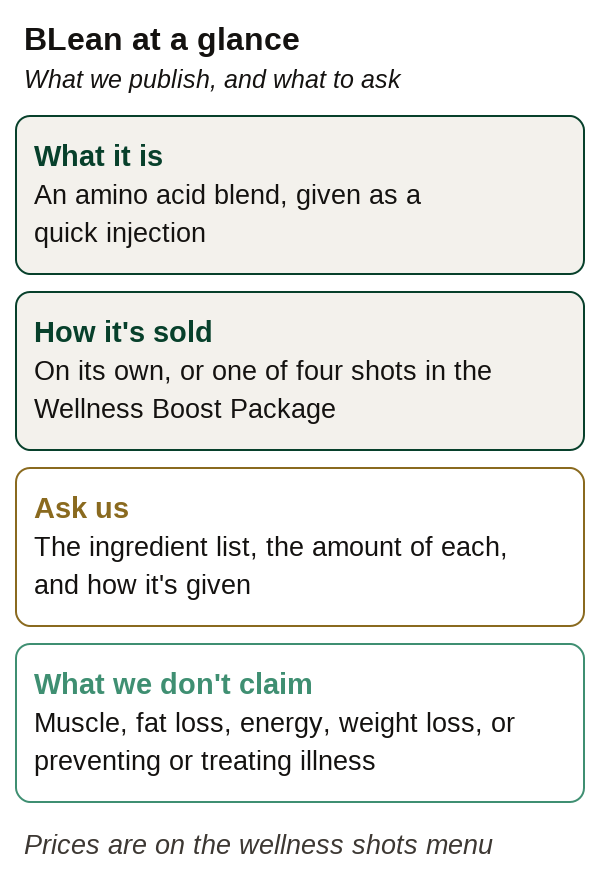
BLean is the shot our menu lists as an amino acid blend. The menu describes it this way: “An amino acid blend given as a quick injection. Amino acids are the building blocks your body uses to make protein, and most people get plenty from food.” It’s $30 on its own, or part of the $80 Wellness Boost Package, which is exactly four shots: Lean Ease (Lipo-C, which contains B12), NAD+, Revita Shot (glutathione and vitamin C), and BLean. Vitamin B12 is a separate single shot.
We don’t claim BLean builds muscle, burns fat, raises energy, helps weight loss, or prevents or treats any illness. Its ingredient list, the amount of each, and how it’s given aren’t published here: ask us at your consultation, and mention kidney or liver disease, an inherited metabolic condition, allergies, pregnancy, or breastfeeding first.
Visits come to your home or office, or the Lutz office, with no travel fee anywhere in Hillsborough, Pasco, and Pinellas counties. At any house call, including ours, ask how the product was stored on the way and what the plan is for a serious reaction. For the rest of the menu, see vitamin shots for energy and our guide to vitamin injections.
Ask your physician before any amino acid shot if one of these applies. The cautions come from the labeled hospital product and MedlinePlus; we found no study of them for wellness shots.
People with PKU follow a lifelong diet very low in phenylalanine, an essential amino acid, per MedlinePlus, so any blend’s ingredient list matters.
See a professional instead of buying a shot if you have fatigue that won’t lift, weight loss you didn’t plan, muscle weakness, or a poor appetite. The advisory lists fatigue beyond what’s expected and muscle weakness among signs of a true nutrient deficiency, which needs a workup, not a guess. Start with your physician; a registered dietitian can build the protein plan. If you suspect low B12, read B12 deficiency symptoms.
These rows follow the after-shot guidance on our other wellness shot pages and the MedlinePlus pages on anaphylaxis and on cellulitis, a skin infection.
| After any shot, if you notice | What to do |
|---|---|
| Chest pain, trouble breathing or swallowing, wheezing, or swelling of the face, eyes, lips, tongue, or throat | Call 911. These can be signs of a severe allergic reaction |
| Fainting or nearly fainting, confusion, or cold, clammy skin | Call 911 |
| Hives, itching, or a rash with no trouble breathing | A possible allergic reaction. Get medical help right away, and call 911 if it gets worse |
| Fever, chills, shaking, or vomiting | Call your physician right away; go to the ER if you feel faint or very ill |
| A shot spot that gets more painful, swollen, red, or warm over the next few days, or drains pus | Call your physician today. These can be signs of a skin infection |
| Flushing, dizziness, nausea, or a racing heart within minutes to an hour of a shot, especially with itching or hives | This could be a severe allergic reaction. Call 911 |
| Mild nausea or dizziness hours later that doesn’t pass, with no other signs | Contact your physician the same day |
In medicine, amino acids are given into a vein as part of IV nutrition for people who can’t eat or be tube-fed, with regular blood tests. Amino acid shots are also sold at wellness clinics, but we found no randomized trial showing benefits such as more energy or muscle in healthy adults.
We found no trial showing that amino acid shots cause weight loss, and MeliOra makes no weight-loss claim for its BLean shot. GLP-1 medicines have been tested in weight loss trials in which everyone also had diet and exercise counseling, and results varied. A physician can tell you whether one fits your health history.
Not in any trial we found. Muscle comes from strength training plus enough protein, and a 2025 nutrition advisory says extra protein alone is likely not enough without strength training. Most adults get the amino acids they need from food, and a shot isn’t a substitute for either habit.
For most people, no. Food supplies protein in grams: about 7 grams in one large egg or an ounce of meat or fish. Injected amino acids replace food only in hospital IV nutrition, which runs to hundreds of milliliters a day. If you can’t eat enough protein, talk to your physician or a dietitian.
Any injection can cause a skin infection, and allergic reactions are possible. People with kidney or liver disease, PKU or another inherited amino acid disorder, or a pregnancy should ask a physician first. Trouble breathing or swallowing, swelling of the face or tongue, or flushing and dizziness soon after a shot means calling 911.
BLean is an amino acid blend given as a quick injection. Its ingredient list, the amount of each, and how it’s given aren’t published here, so ask at your consultation. It costs $30 on its own, or it’s one of four shots in the $80 Wellness Boost Package.
Serving Lutz, Wesley Chapel, Land O'Lakes, Carrollwood, New Tampa & greater Tampa Bay.
Book Your Consultation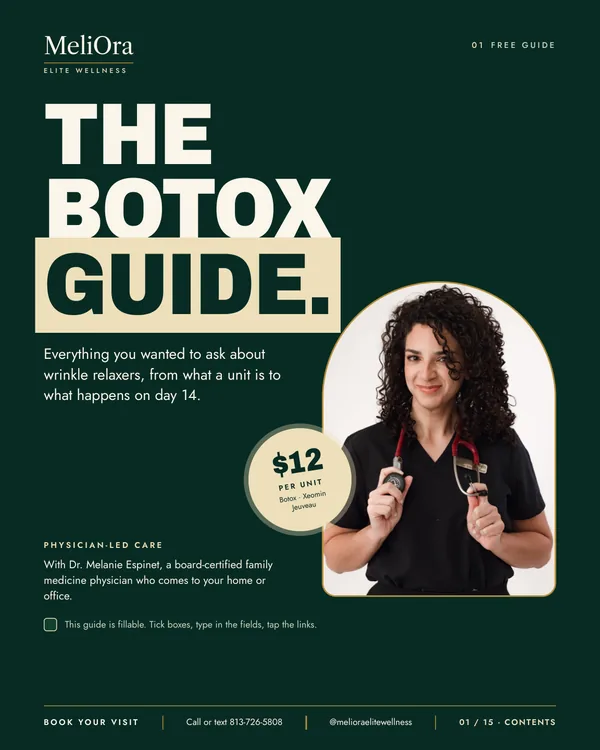
Free download · 15 pages
Typical units and cost by area, Botox brands Jeuveau vs. Xeomin, aftercare, a results timeline and a planner you can fill in. Free, and yours to keep.
Get the free guide